
Nanyang Traditional Kopi — “kopi” is Malay for “coffee” — is a distinct style of coffee deeply rooted in the culinary heritage of Southeast Asia, particularly in Singapore and Malaysia. “Nanyang” is a historical term used by Chinese immigrants to refer to the region “south of the oceans”.
Today, traditional kopi remains exceptionally popular in Singapore and Malaysia, driven by the strong cultural heritage and a modern revival among younger generations through retro-themed heritage cafes or Nanyang kopitiams (modern restaurants that offer local delights with traditional kopi).

Nanyang Traditional Kopi vs Western-style Coffee
Unlike Western-style coffee (espresso, black, lattes, etc) which are brewed direct using ground roasted coffee beans, Nanyang traditional kopi is defined by its unique double roasting and pre-mixing processes, brewing and straining technique, and specific ordering lingo — we will discuss more on the kopi lingo shortly.
Traditional kopi uses coffee premix which is a mixture of ground roasted coffee beans with salt, oil (margarine, butter, vegetable oil or others) and caramelised sugar. The ratio is roughly 80% coffee ground to 20% others. Despite the additives to cut the bitterness of the coffee (typically Robusta beans) and inducing flavours, coffee premix still lean more on the bitter side.
Find out how traditional kopi is made, read:
Taiping See: Historical Antong Coffee Mill (安东咖啡厂)
Price-wise, a cup of traditional kopi in Singapore range from S$0.90 to S$1.50 in coffee shops and is far cheaper than Western coffee that cost around S$5 to S$12 in cafes. A key factor contributing to the large price gap is the type of coffee beans used among other reasons. Traditional kopi uses cheaper, bitter Robusta beans whereas Western coffee uses pricier, lesser-bitter Arabica beans. In Nanyang kopitiams, specially-roasted traditional kopi that blend Robusta with Arabica and/or Liberica beans will tend to cost more but still cheaper than Western coffee.
More about coffee beans, read:
Coffee Story: Arabica, Robusta, Liberica & Excelsa Beans in Southeast Asia
Significance of Sugar & Milk
When it comes to coffee, regardless of Western-style coffee or Nanyang kopi, the other two accompaniments that need to be discussed are sugar and milk. Although optional, both sugar and milk are often added to coffee to manage its bitterness — neither sugar nor milk can eliminate the bitterness of coffee, they mask the coffee bitterness by coating the tongue with sweetness, fats and proteins.
In Western coffee, sugar is usually optional but milk or whipped cream may be added depending on the type of coffee ordered, especially lattes and flavoured coffee. Sugar often accompanies the beverage in small sachets of 4~5 grams each (around 1 teaspoon full per sachet).

In a cup of Nanyang kopi that uses 10 grams of coffee premix with just hot water, sugar (pre-added during the roasting process) may already take up 1~2 grams — 2 grams of sugar is about half a teaspoon and is inherent even in a cup of bitter-tasting black coffee (or kopi-O). A typical cup of traditional kopi will add 1~2 teaspoons of sugar and 1 tablespoon (2~3 teaspoons) of sweetened condensed milk, where 40~45% of it is sugar.
World Heath Organisation recommended consuming no more than 6 teaspoons of sugar (approx. 25 grams) a day for optimum health. If you are not aware, two cups of Nanyang kopi (with sugar and condensed milk) a day can easily wipe out the 6-teaspoon-sugar daily limit with no room for other foodstuffs. So, drinking the correct type of kopi is important for health too, especially if you drink it on a daily basis.
The Kopi Lingo
A foreigner to Singapore once told me that Nanyang kopi was very sweet and milk was added without being asked for. After clarification, I told him that he did order “coffee with sugar and milk” — well, he simply asked for “coffee” in a coffee shop thinking that he would be getting a cup of black coffee and adding the sugar and/or milk himself. He did not know about our “kopi lingo”.
Travellers do need to understand the lingo used in Singapore and Malaysia to order the desired type of traditional kopi at coffee shops and Nanyang kopitiams. The kopi lingo used to be spoken words used by local communities, comprising Malays, Indians and Chinese immigrants, to specify the desired “configurations” of their coffee. It is a series of hybrid, shorthand phrases that combine Malay and Mandarin dialects, such as Hokkien, Hock Chew and Cantonese. And they are all about sugar and milk.
Check out the list of kopi lingo below and order your right cup of traditional kopi. By the way, the same lingo apply to traditional teh (tea) too.
Coffee with Milk (咖啡)
1. Kopi
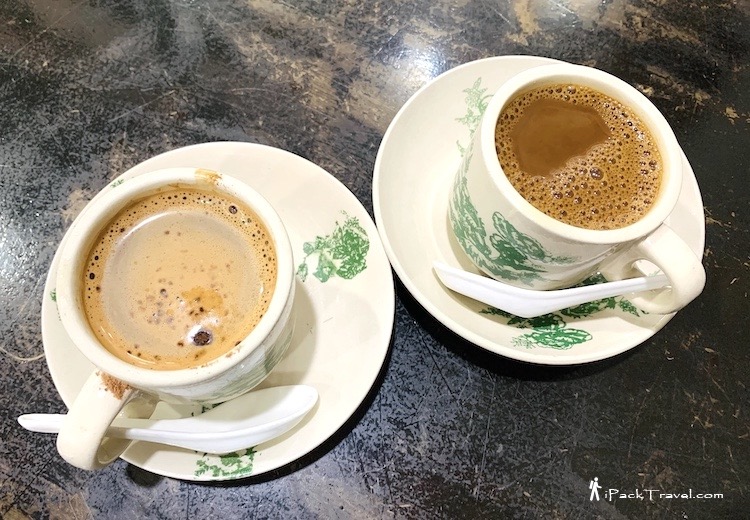
Although “kopi” means “coffee” in Malay, it is a different thing when it comes to ordering a cup of traditional kopi. The order will be black coffee added with 1~2 teaspoons of sugar and 1 tablespoon of sweetened condensed milk. Kopi is sweet by normal standard.
2. Kopi Gao
“Gao” is “thick” in Hokkien. This means more black coffee and less water. The amount of sugar and condensed milk are the same as kopi.
3. Kopi Poh
“Poh” is “thin” in Hokkien. This means lesser black coffee and more water to give a cup of “light” or more diluted coffee. The amount of sugar and condensed milk are the same as kopi.
4. Kopi Siew Dai
“Siew dai” means “less sweet” in Hock Chew, or in some explanations, “small base” in Cantonese, referring to sugar and milk at the base of the cup. In this case, sugar and condensed milk will be halved. In some coffee shops, sugar is omitted.
5. Kopi Gah Dai
Inversely to “siew dai“, “gah dai” means “more sweet”. More sugar will be added to black coffee with same amount of condensed milk. This is a recipe to diabetes!
6. Kopi Di Lo
“Di lo” means “pour all the way” in Hokkien. It means “extra thick coffee” with more black coffee and more milk. However, this item is seldom on menus and rarely heard of these days. As milk is more expensive, ordering a “di lo” will incur extra charge. Moreover, real coffee drinkers will not ask for more milk.
7. Kopi-C
“C” is a shorthand for “fresh” in Hainanese, which sounds like “c” or “si“, or in some explanations, the first letter of “Carnation”, the popular brand of evaporated milk in the old days. It means to use unsweetened evaporated milk instead of sweetened condensed milk in a cup of kopi.
However, the amount of sugar in a cup of kopi-c may not be just one teaspoon as some coffee shops have the tendency to add an extra teaspoon of sugar to make up for the lost in sweetness. If “less sweet” is really what you intended, ask for kopi-C siew dai (i.e. black coffee with evaporated milk and less sweet).
You can have “gao“, “poh” and “siew dai” with kopi-C too. It is contradicting to order kopi-C with “ga dai” and “di lo“.
Noticed that while sugar can be increased or reduced, there is no such flexibility for milk. This is because milk is more expensive. Adding milk requires extra charges but reducing milk will not make the beverage cheaper. Sugar is very cheap, so adding more has no additional costs — but pay with health.
Coffee Without Milk (黑咖啡 / 咖啡乌)
In Western context, a cup of black coffee has no milk added, and is supposedly the coffee’s original state. In traditional kopi context, ordering a cup of no-milk coffee needs to be specific in stressing the “black” — failing to do so, you will end up with a cup of kopi with sweetened milk.

1. Kopi-O
“O” is a shorthand for “black” in Hokkien, which sounds like “aw“. This means black coffee with 2 teaspoons of sugar, which is usually sweet by normal standard but not as much as kopi.
2. Kopi-O Gao
Similar to kopi gao, it means “thick black coffee” with sugar.
3. Kopi-O Poh
Similar to kopi poh, it means “light black coffee” with sugar. Before going for a kopi-O poh, do try a cup of normal kopi-O prior. Kopi-O poh is highly-diluted sweetened coffee, which usually cannot satisfy serious coffee drinkers, unless the concern is caffeine.
4. Kopi-O Siew Dai
Similar to kopi siew dai, this means “less sweet”. One teaspoon of sugar will be added to black coffee instead of the usual two.
Oh, this is my usual order! If you like the coffee to be thicker and less sweet, ask for kopi-O gao siew dai.
5. Kopi-O Ga Dai
Similar to kopi ga dai, this means “more sweet”. And that means 3 teaspoons of sugar!
In today’s health-conscious society, you will seldom hear people ordering this. Adding 3 teaspoons of sugar will take up more than 50% of the 6-teaspoon limit (remember that coffee premix already has half a teaspoon of sugar). And that is from just one cup of morning coffee!
6. Kopi-O Kosong
“Kosong” is Malay for “zero” or “nothing”. It means to add nothing at all. Therefore, kopi-O kosong is just black coffee with neither sugar nor milk. This is the original taste of Nanyang coffee.
QUICK REFERENCE
Kopi — Coffee with sugar and sweetened condensed milk.
Kopi-C — Coffee with sugar and unsweetened evaporated milk.
Kopi-O — Black coffee with sugar.
Kopi / Kopi-C / Kopi-O Gao — Thick coffee with normal sugar and/or milk.
Kopi / Kopi-C / Kopi-O Poh — Diluted coffee with normal sugar and/or milk.
Kopi / Kopi-C / Kopi-O Siew Dai — Less sweet / less sugar and milk.
Kopi / Kopi-C / Kopi-O Ga Dai — More sweet / more sugar.
Kopi-O Kosong — Black coffee without sugar and milk.
Kopi Di Lo — Extra coffee and milk. (Seldom used)
You can further pair “gao” and “poh” with “siew dai” and “ga dai” to have thick / diluted coffee with less / more sweetness.
Note that there is no such thing as “kopi kosong“, which is a contradiction as kopi has milk and kosong means no milk. Some coffee shop staff may be forgiving and make you a cup of kopi-O kosong but some may think that you are trying to be funny and “educate” you. So, save yourself an embarrassment.
Similarly, there is no such thing as “kopi-O di lo“, as kopi-O has no milk so it cannot have extra milk. Ask for “kopi-O gao” to have thick black coffee.
In addition, you can ask for iced version of the coffee by appending “peng” (meaning “ice”) to each item. For example, “kopi peng” for iced kopi, “kopi-O gao siew dai peng” for iced thick black coffee with less sugar, etc. However, ice is made from water, as it melts, your coffee becomes diluted.
SPECIAL TRADITIONAL COFFEE
Aside from ordering typical traditional kopi using the lingo as mentioned above, there are some special traditional coffee that warrant some attention.
1. White Coffee
In Western coffee culture, “white coffee” is the result of adding milk / cream to black coffee, which is a cup of “milk coffee” (just like “milk tea”). This often creates confusion when it comes to Nanyang kopi.
In Nanyang kopi context, coffee powder that are pre-mixed with black caramelised sugar are called “black coffee” and those without sugar are called “white coffee”. In other words, “white coffee” is not “milk coffee” — it is unsweetened black coffee.
Ipoh, in Perak of Malaysia, is famous for its white coffee, which is often served with condensed milk to add flavour and to sweeten the coffee without sugar. This creates a misconception among many people that “white coffee” equals to “milk coffee”.
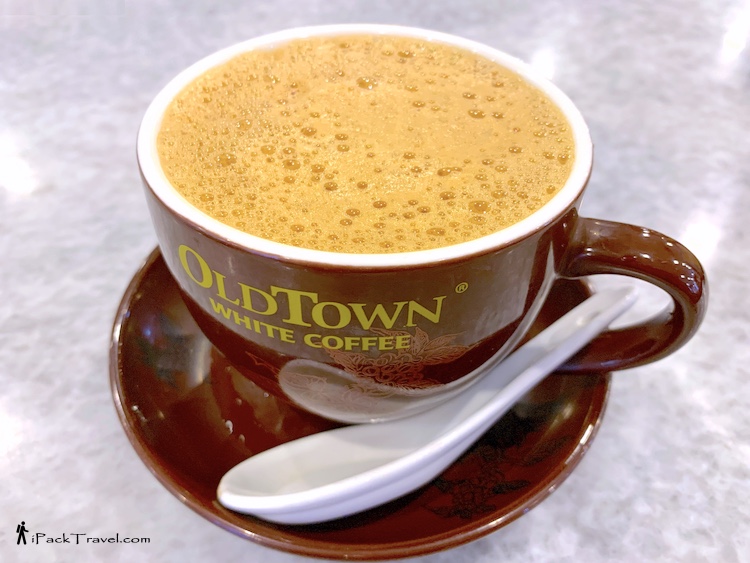
In some Nanyang kopitiams that offers both black coffee and white coffee, you will probably see “kopi / kopi-O / kopi-C” on their menus for black coffee and, for white coffee, it will be “white kopi / white kopi-O / white kopi-C“. This gives very clear indications that white coffee is not milk coffee since “white kopi-O” is a contradiction.
2. Cham / Yuan Yang (鸳鸯)
“Yuan yang” is Chinese for “mandarin duck”, which are usually in pairs. “Cham” is Hokkien for “mix”.
In the context of traditional coffee, a typical cup of “yuan yang” or “cham” means mixing black kopi-O with teh (milk tea). The colour is usually darker than milk kopi but sweetness may vary — depending on whether condensed milk (for cham) or evaporated milk (for cham-C) is requested. Note that cham-O (no milk) may also be available at some coffee places, but it is not a standard recipe.

3. Kopi / Kopi-O Halia
“Halia” is Malay for “ginger”. It means to add ginger water to kopi or kopi-O. Kopi halia and kopi-O halia are usually available at Muslim-Indian coffee shops / restaurants.

Do you know how to order the right traditional kopi for yourself now? Good. After ordering your kopi, kopi-C or kopi-O, learn how to drink it. Check out the link below.
Next:


Leave a Reply