
Crossing the Straits of Johor between Singapore and Johor, in West Malaysia, is easy. There are a number of ways to do it but prices, flexibility and comfort levels differ.
Aside from the two popular bridge links at Woodlands and Tuas checkpoints, there is also a shutter train service at Woodlands Train Checkpoint and two ferry services from Tanah Merah Ferry Terminal, totalling 5 channels for travellers to cross the border. A new Johor Bahru–Singapore Rapid Transit System (RTS) Link service between Singapore and Johor Bahru is also expected to be ready by February 2027.
Depending on where you are heading to, you can make use of the different channels available to get to your destination faster and experience the different modes of transport and routes — refer to the map for their locations and routes.
1. By Road via Woodlands Causeway
Opened in 1924 during the British administration, the historical 1.05 kilometre Johor–Singapore Causeway (commonly known as the Woodlands Causeway) ranks as one of the busiest land border crossings in the world, accommodating over 300,000 daily travellers.
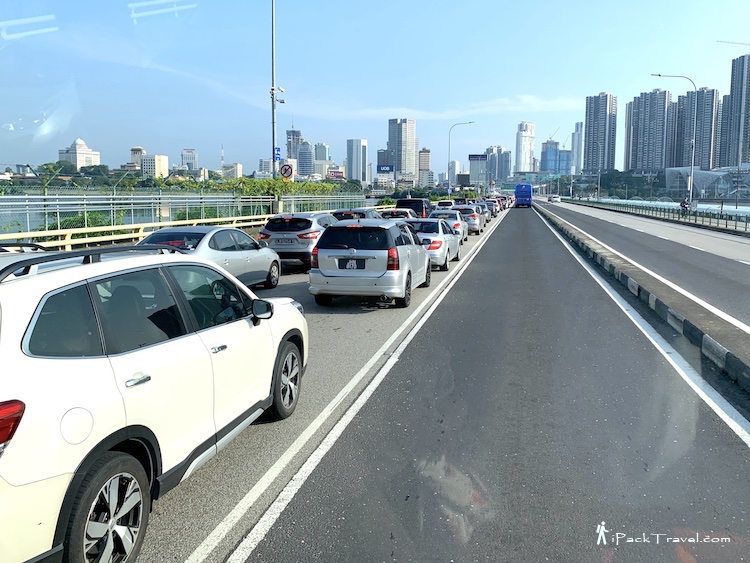
Cross-border bus services departing from Singapore will make use of the Causeway and terminate either at Johor Bahru checkpoint (JB CIQ) or at Larkin Sentral (Johor Bahru’s largest public transport terminal). Travellers going to shopping malls in Johor Bahru will usually drop off at JB CIQ and switch to local public transport. Those going further north beyond Johor Bahru will continue the bus journey to Larkin Sentral.
Bus services are the cheapest transport mode, high frequency and take just 5 minutes to cross the Causeway — especially during off-peak hours using the right-most lane for heavy vehicles. As the Causeway is often congested during peak hours, weekends and school holidays, it is essential to know the best times to cross the causeway to avoid getting caught in traffic congestions.
More:
2. By Road via Tuas Checkpoint (2nd Link)
Tuas Checkpoint (or Tuas Second Link) is Singapore’s western land border crossing, linking the island directly to Johor. Opened in 1998, the road link is a less congested alternative to Woodlands Checkpoint. Many tour buses, lorries, etc, heading to Malaysia during expected peak hours will make use of the Tuas Link to skip traffic congestions, avoiding delays.
Cross-Border bus services using the Second Link allow travellers to head to shopping malls in Bukit Indah, Eco Botanic and Taman Sutera Utama, and also directly to Pontian District, to the west of Johor Bahru.
More:
3. By Train from Woodlands Train Checkpoint
For travellers who dislike the idea of crossing the Straits of Johor using buses, another alternative is to use the shuttle train service, operated by Malaysia’s KTMB, between Johor Bahru and Woodlands.
The train service used to be a long-haul service between Tanjong Pagar in Singapore and Kuala Lumpur in Malaysia. In 2011, Tanjong Pagar Railway Station ceased operations and the railway service was moved to Woodlands Train Checkpoint. Subsequently, as KTMB upgrades Malaysia’s railway network to support the new Electric Train Service (ETS) in phases, the shuttle train service between Singapore and Johor Bahru was devised, but using old trains.

“Shuttle Tebrau” is the name given for the short-distance service and it transits to-and-fro between JB Sentral and Woodlands Train Checkpoint only. It is often touted as a “5-minute journey” but immigration procedures require passengers to be at the train checkpoint at least half an hour prior to departure. For non-Malaysians, it costs S$5 to travel from Singapore to JB Sentral. The return ticket is RM5 if purchased in Johor Bahru — well, if not sold-out.
Aside from taking the shuttle train at Woodlands Train Checkpoint, you can walk from the train checkpoint to Woodlands Checkpoint’s Departure Hall using the interconnected passageways between the two checkpoints. This can be useful when there are congestion on the roads leading to Woodlands Checkpoint.
Note: Shuttle Tebrau will cease operations around mid-2027 — 6 months after the RTS Link began operations, which is targeted to be in February 2027.
4. By Ferry to Pengerang
There is a ferry service from Singapore to Tanjung Pengelih in Pengerang, Johor, especially for the farms and resort beach in Desaru. Used to be serviced by cheap bumboats from Changi Point Ferry Terminal, the service had ceased since March 2020 during the COVID-19 pandemic. A new route between Tanah Merah Ferry Terminal and Tanjung Pengelih Ferry Terminal began on 1 December 2022.
BatamFast Ferry operates the ferry service on Saturday and Sunday only with just 1 trip per day. The service departs from Tanah Merah Ferry Terminal at 8:30am and the return trip from Tanjung Pengelih is at 4pm. A one-way fare costs from S$49 per person and round-trip fare is around S$85 per person. The journey is around 45 minutes.
Note: Public transports like taxis, buses, or ride-hailing services are generally unavailable at the Tanjung Pengelih Terminal. Pre-arrange a private Malaysian driver or transport beforehand.
Refer to BatamFast Ferry Schedule for updates in schedule and also the latest fare.
5. By Ferry to Desaru Coast
BatamFast Ferry introduced a new ferry service to Desaru Coast Ferry Terminal further up the coast in July 2022, allowing travellers to reach the northeastern corner of Desaru by sea.
The ferry service operates from Thursday to Sunday with just 1 trip per day. It departs from Tanah Merah Ferry Terminal at 10.10am and the return trip from Desaru Coast Ferry Terminal is at 5:30pm. One-way fare is around S$82 and round-trip fare is around S$132. The journey is about 1 hour 30 minutes.
At Desaru Coast Ferry Terminal, there are free shuttle bus services connecting the ferry terminal to hotels and attractions. However, ride-hailing services are generally unreliable / unavailable.
Refer to BatamFast Ferry Schedule for updates in schedule and also the latest fare.
Despite the hefty ferry fares to Pengerang / Desaru Coast, the journey is much faster than 3~4 hours (minimum) travelling on land.
Whatever the means, don’t swim across the Straits of Johor — aside from being illegal, saltwater crocodiles “patrol” those waters.
Next:
More on Singapore-Johor Crossing:


Leave a Reply