
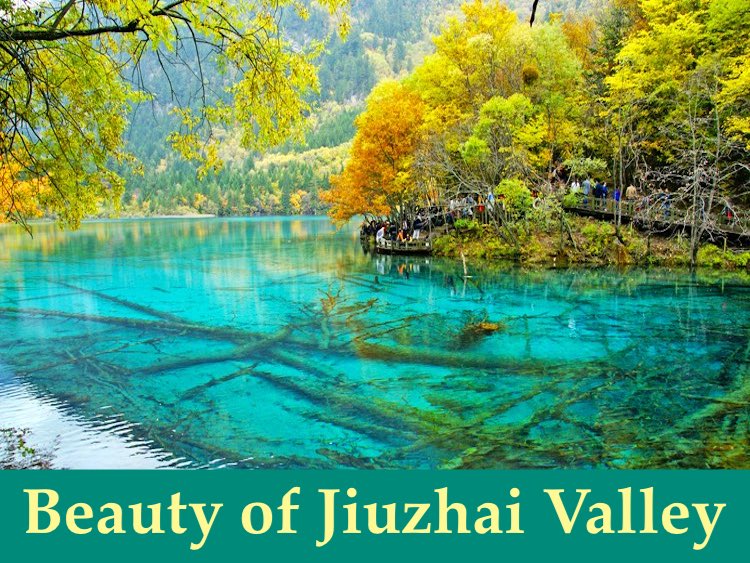
Jiuzhai Valley / Jiuzhaigou National Park (九寨沟) — a natural UNESCO World Heritage Site that spans over 720 square kilometres in Sichuan, China — literally means “Nine Village Valley” due to the nine Tibetan villages located in and around the valley. The park is famous for its “fairyland” landscape of crystal-clear, multi-coloured lakes, cascading waterfalls, and jagged, snow-capped alpine mountains.
Jiuzhai Valley consists of 3 valleys connected in a “Y” shape. The park entrance is at the bottom end of the “Y”. From the park entrance to the intersection point of the “Y” before the road forked is Shuzheng Valley (树正沟). Branching to the right is Rize Valley (日则沟) and Zechawa Valley (则查洼沟) is on the left. The park has internal transports along the roads to ferry visitors to far away spots. (See map on official website)
Most visitors will start with the Rize Valley, followed by Zechawa Valley and, lastly, Shuzheng Valley before exiting the park via the same entrance. Nuorilang Waterfall (诺日朗瀑布), the prime attraction of Jiuzhai Valley, is at the intersection point — you can say that all roads lead to the waterfall. The last part of the visit will be to walk from the waterfall through Shuzheng Valley to the park entrance — be advised that it is usually not possible to hop on a transport towards the end of the day when everyone is leaving the park, especially during peak seasons.
I visited Jiuzhai Valley during an early-autumn season, when the green scenery was mixed with emerging red and gold of autumn. See the photos below.
FIRST FORK: Rize Valley (日则沟)
As mentioned, most visitors will start with Rize Valley as the 18Km valley has the most number of sight-seeing spots. The furthest end of Rize Valley is at The Virgin Forest (原始森林) and taking the internal transport is a must. For one-day visit, most visitor will skip the forest as it is too far away and will need another transport to double-back to the next-spot. Most will drop-off at the Grass Lake instead to save time — me too.
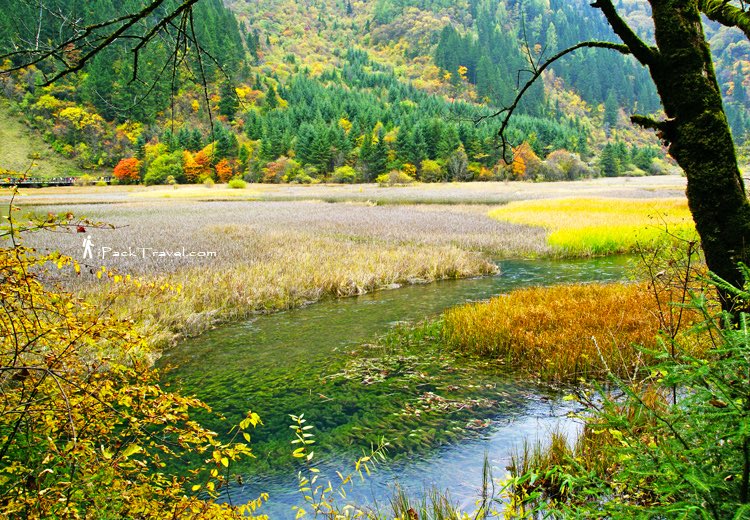
Grass Lake (芳草海)
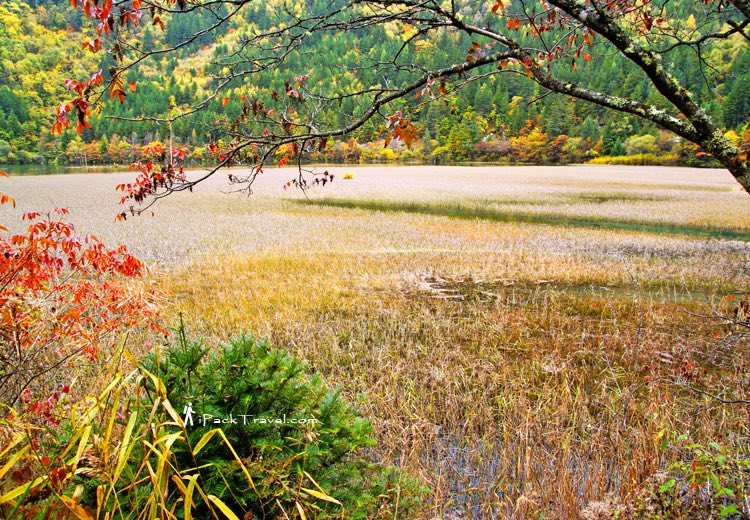
The Grass Lake is at an altitude of 2,910 metres above sea level. The reeds in the lake were green during spring, with flower blossoms in summer, golden yellow in autumn and crystal white in winter.
I took the transport from Grass Lake to the next stop and missed the Swan Lake (天鹅湖). Starting from Arrow Bamboo Lake & Waterfall, I walked all the way to the Tourist Centre near the intersection of the three valleys.
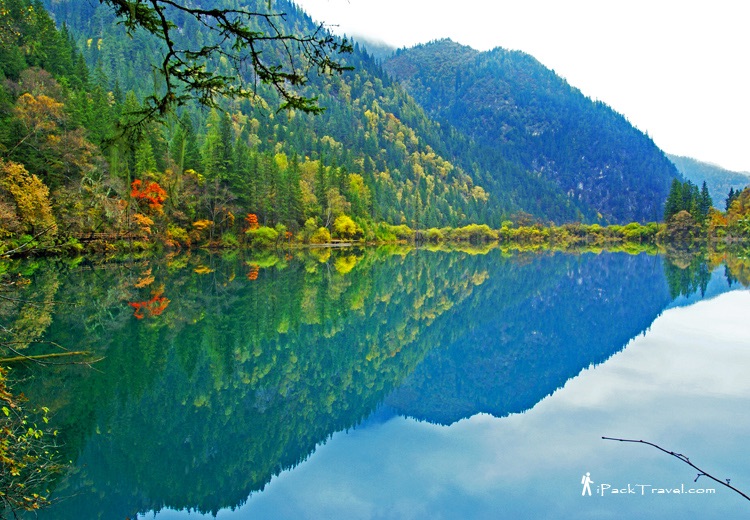
Arrow Bamboo Lake (箭竹海)
Arrow Bamboo Lake got its name due to the arrow bamboos growing around it. It is also a very picturesque lake, especially when the water is calm.
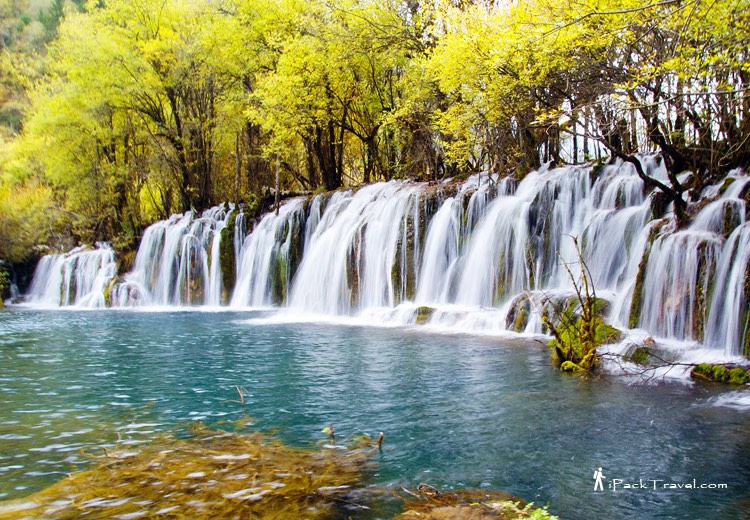
Arrow Bamboo Waterfall (箭竹海瀑布)
Situated in Arrow Bamboo Lake, Arrow Bamboo Waterfall is 7 metres high and spans 150 metres.
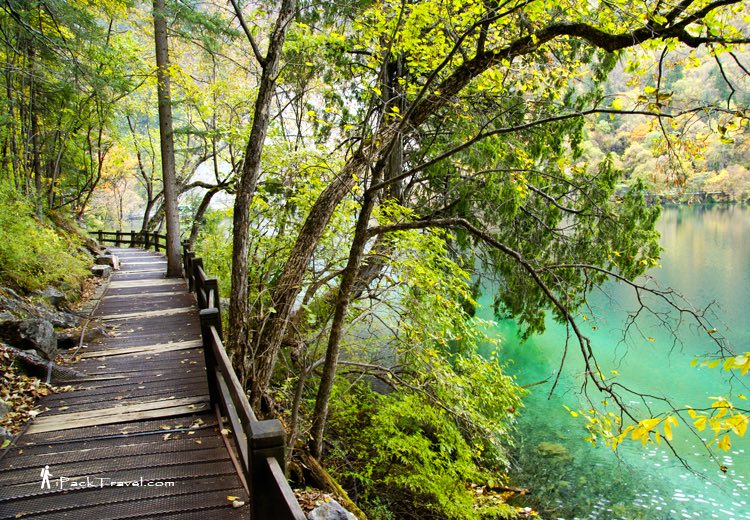
Scenic walking path from Arrow Bamboo Lake to Panda Lake.
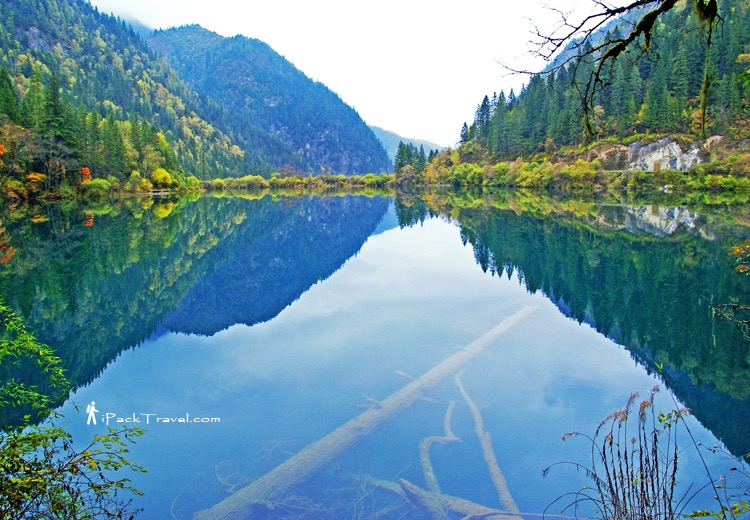
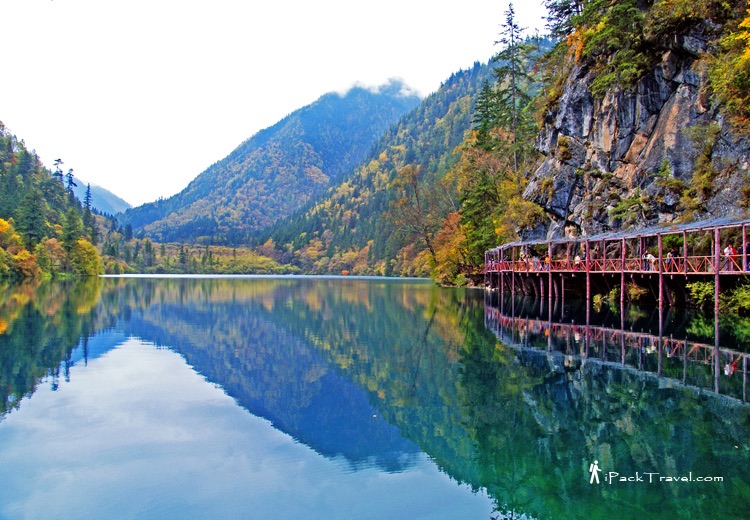
Panda Lake (熊猫海)
There used to be giant pandas going to the lake to drink and hence its name. The same mirror image of the surrounding on calm water is breathtaking.
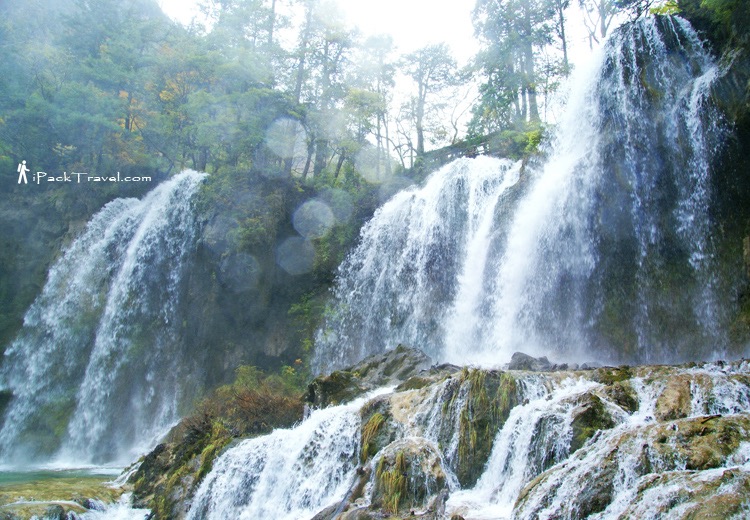
Panda Lake Waterfall (熊猫海瀑布)
The water in Panda Lake will flow down Panda Lake Waterfall, a cascaded waterfall of 78 metres.
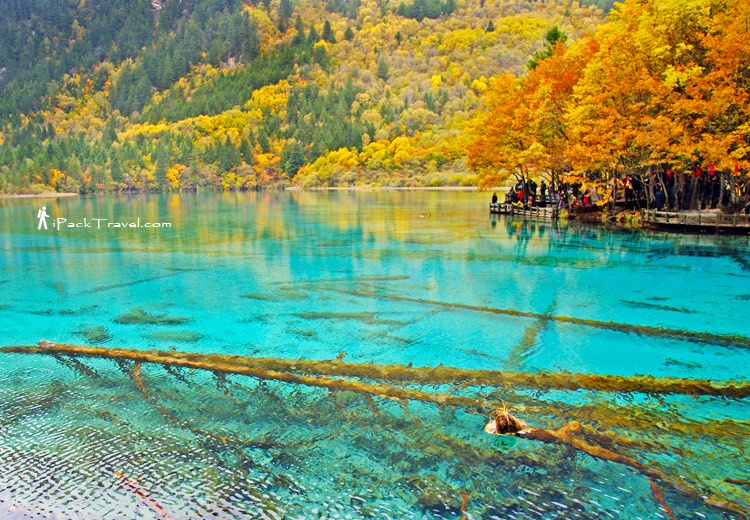
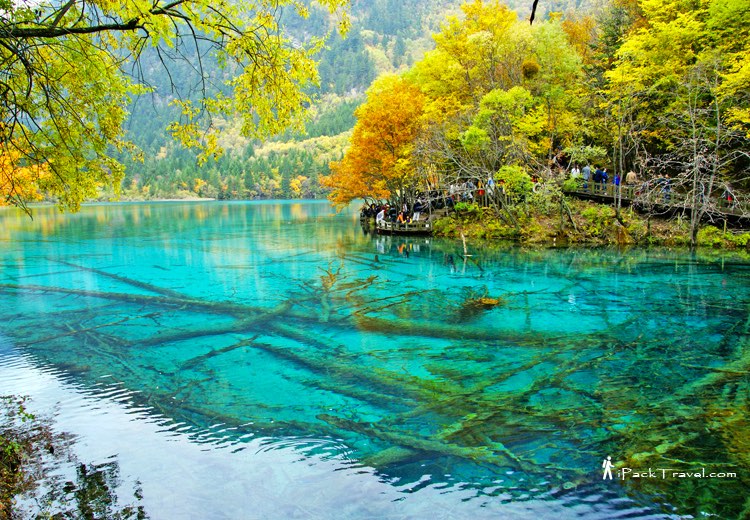
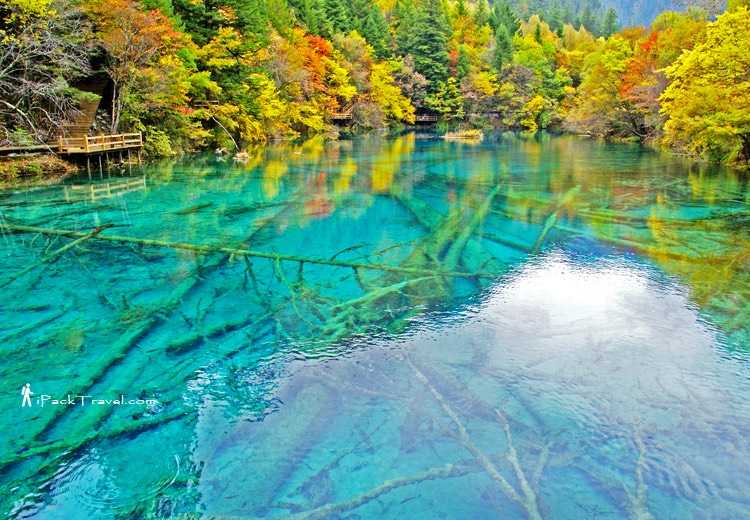
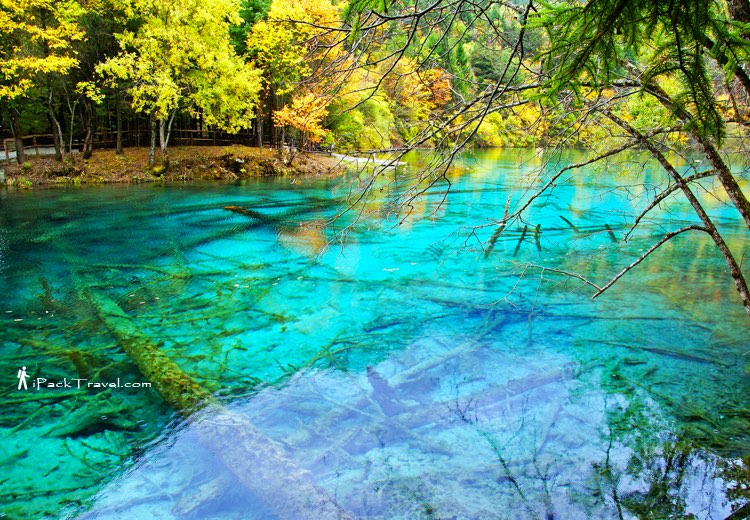
Five-Flower Lake (五花海)
Five-Flower Lake is one of the most beautiful lakes in Jiuzhai Valley. The clear and blue shallow water and old fallen trees in the water give the lake its heavenly beauty. This is a favourite spot for many brides- and grooms-to-be to have their wedding photo shoots.
Pearl Shoals (珍珠滩)
Pearl Shoals has thin sheet of water flowing down a gentle sloping area to end at a waterfall.
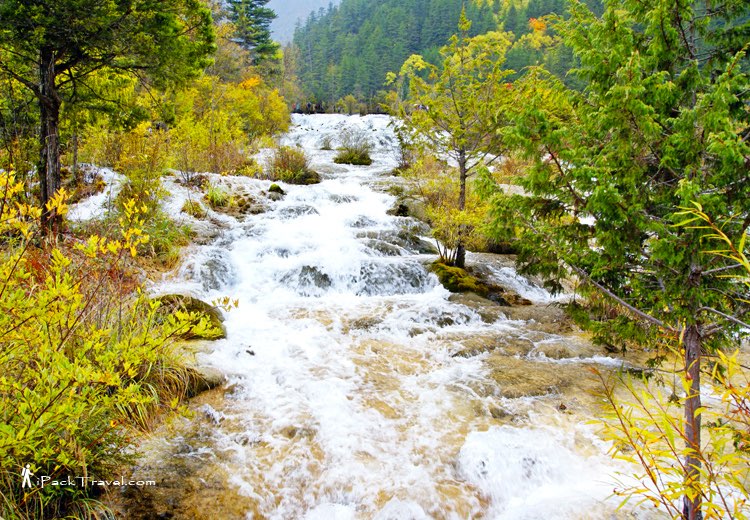
Pearl Shoals Waterfall (珍珠滩瀑布)
Pearl Shoals Waterfall is about 21 metres high and spanning 160 metres.
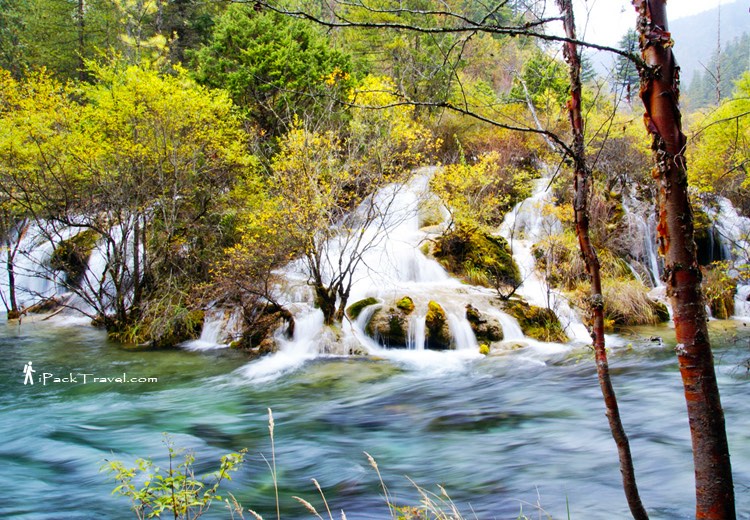
Another beautiful grass lake between Pearl Shoals Waterfall and the next lake — Mirror Lake.
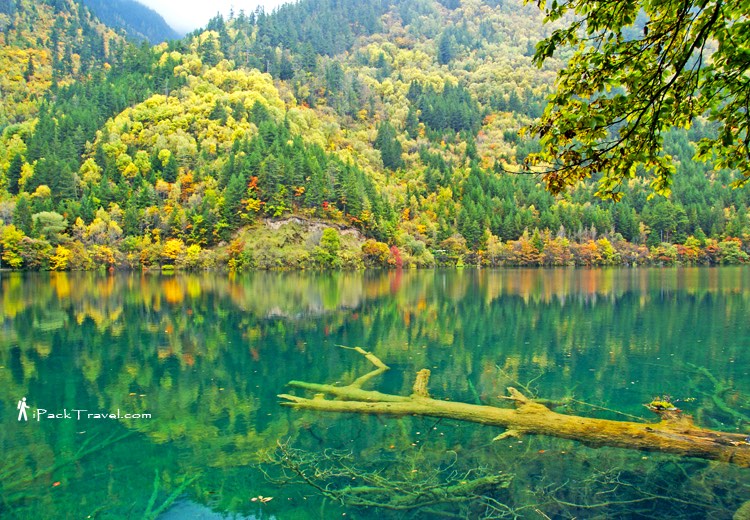
Mirror Lake (镜海)
As the name implies, Mirror Lake is so calm that it can reflect anything above water — but not when there are winds or rains.
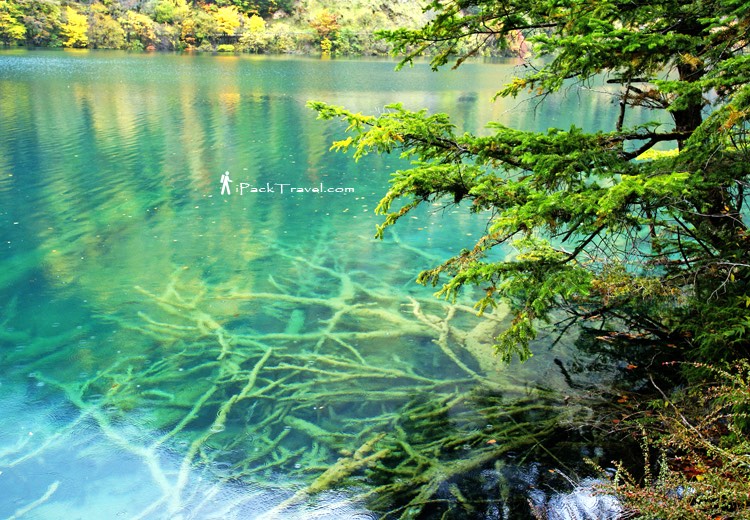
At the Tourist Centre, I had lunch before catching a transport through Zechawa Valley.
SECOND FORK: Zechawa Valley (则查洼沟)
Zechawa Valley has couple of spots to see at the furthest end of the valley.
Long Lake (长海)
Long Lake is the highest accessible point in Zechawa Valley with an altitude of 3,060 metres and measuring 7.5Km with no known distributary channels. The lake is surrounded by mountains, capped with snow all year round, and forests that changed its colours seasonally.
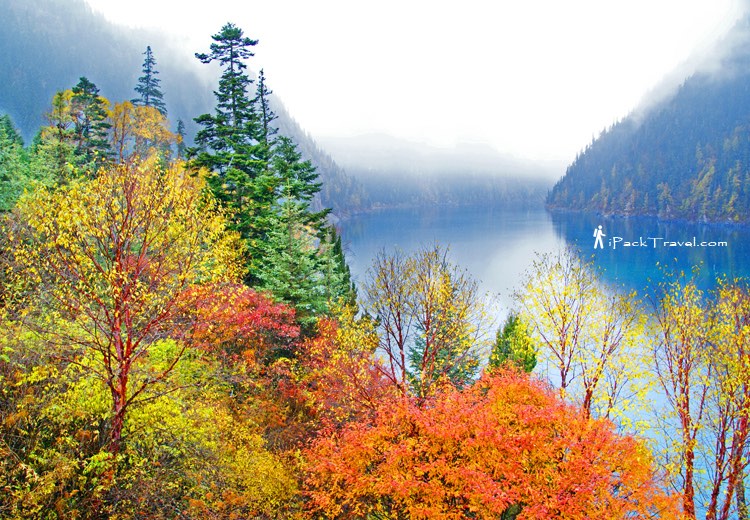
Five-Coloured Pool (五彩池)
Five-Coloured Pool are bodies of clear water with richly coloured underwater landscape.
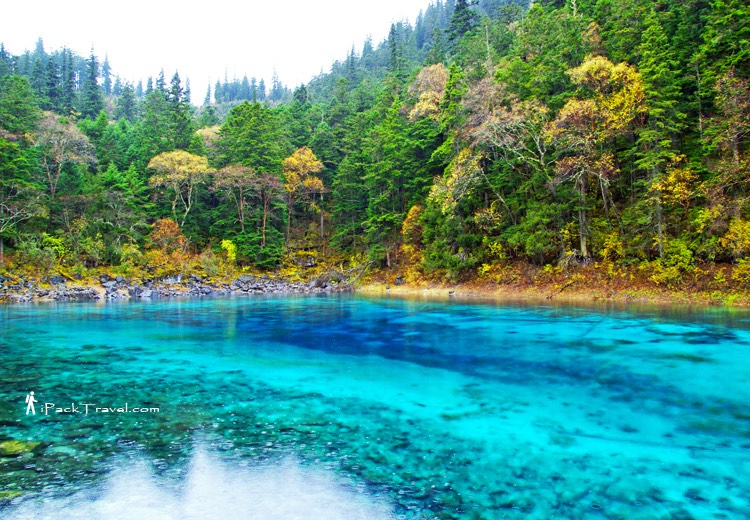
After visiting the Five-Coloured Pool, I took the transport back to the Tourist Centre.
LAST LAP: Shuzheng Valley (树正沟)
Shuzheng Valley lies between the Tourist Centre and the park’s entrance / exit.
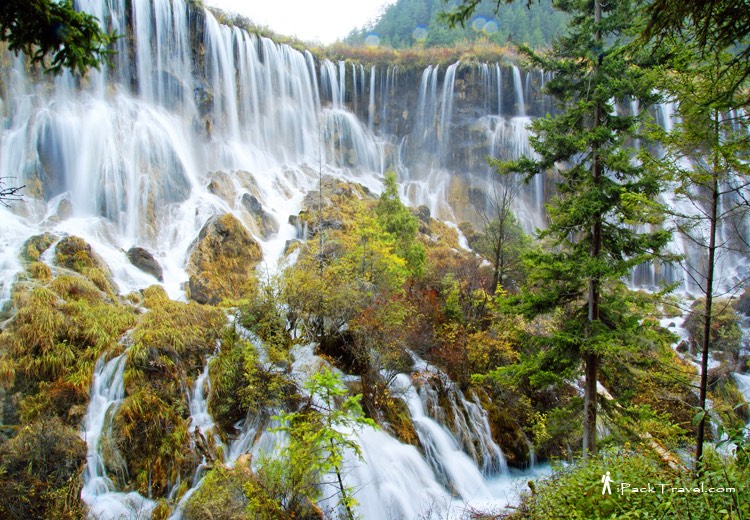
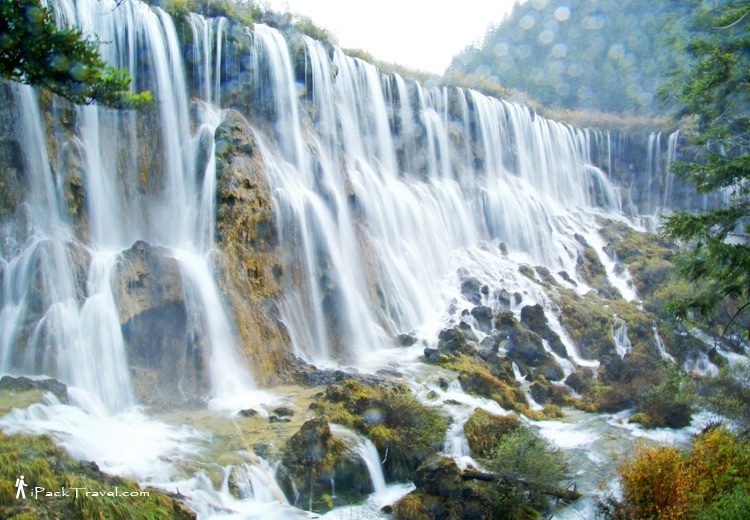
Nuorilang Waterfall (诺日朗瀑布)
Nuorilang Waterfall is the prime attraction in Jiuzhai Valley and spans about 270 metres, the widest waterfall in China. Check out the magnificent waterfall.
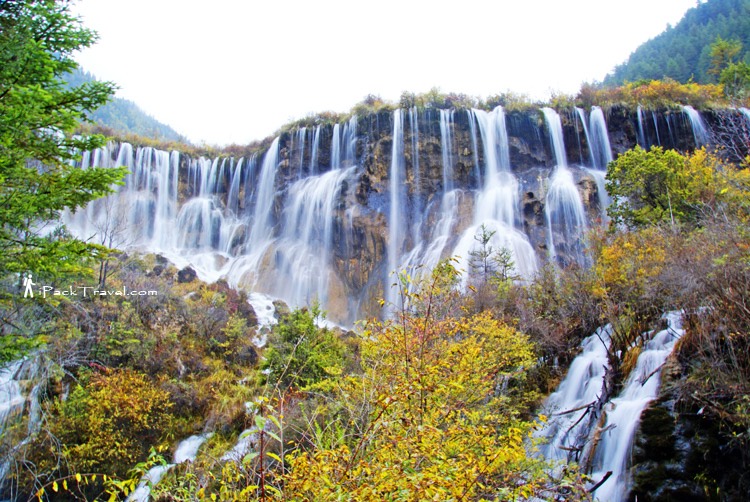
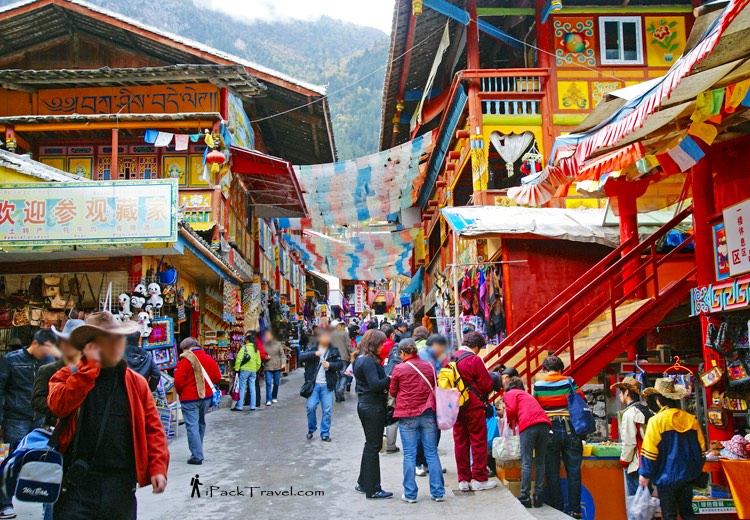
Jiuzhai Valley Ethnic Cultural Village (九寨沟民俗文化村)
The cultural village is actually the Tibetan Shuzheng Village, one of the nine villages in the valley. This is a good place to check out the Tibetan village, try Tibetan food, get some souvenirs and visit a Tibetan temple.
Shuzheng Lakes (树正群海)
Shuzheng Lakes is a series of cascaded lakes that are naturally dammed.
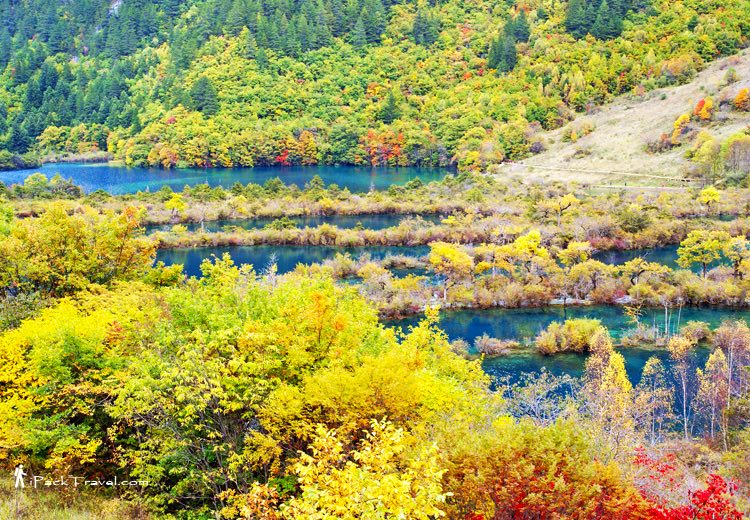
Lying Dragon Lake (卧龙海)
Lying Dragon Lake got its name due to a dyke in the lake that resembles a dragon lying at the bottom. The lake is a little far from the road, but the “dragon” is visible at the bottom of the lake (in middle of the photo).
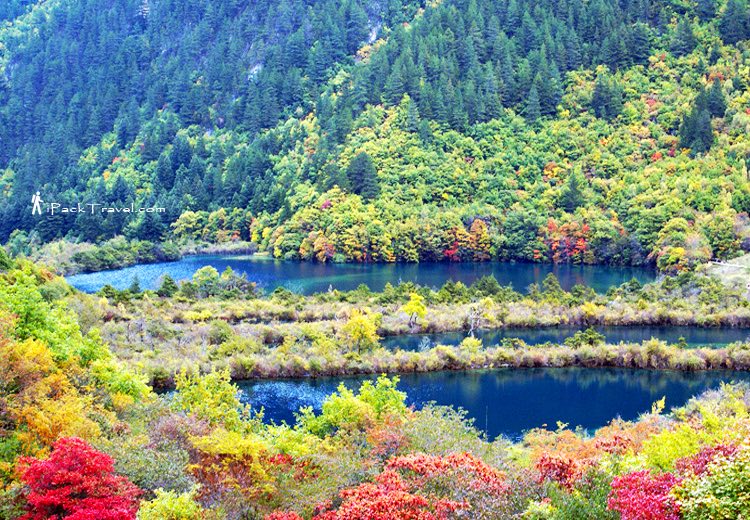
Sparkling Lake (火花海)
I missed Sparkling Lake completely due to a sudden downpour that forced me to hop on a bus, but the rain stopped after just few minutes. I alighted at the next stop.
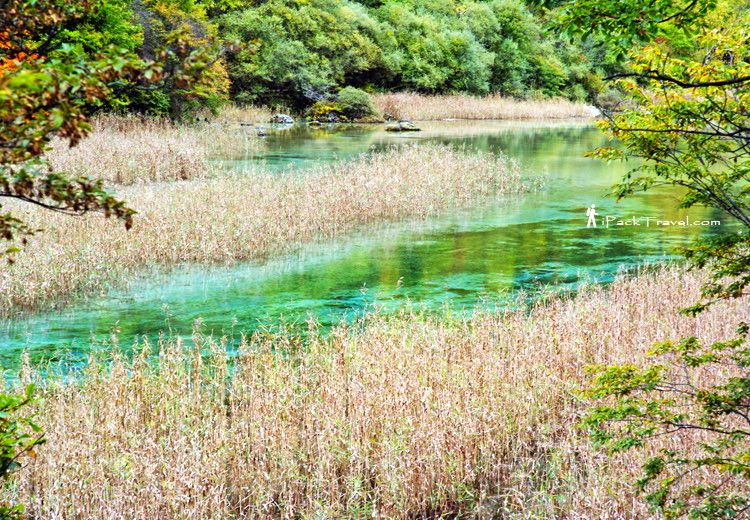
Reed Lake (芦苇海)
The Reed Lake is a reed-covered marsh with a clear turquoise brook zigzagging through it. During autumn, the reeds will turn golden yellow.
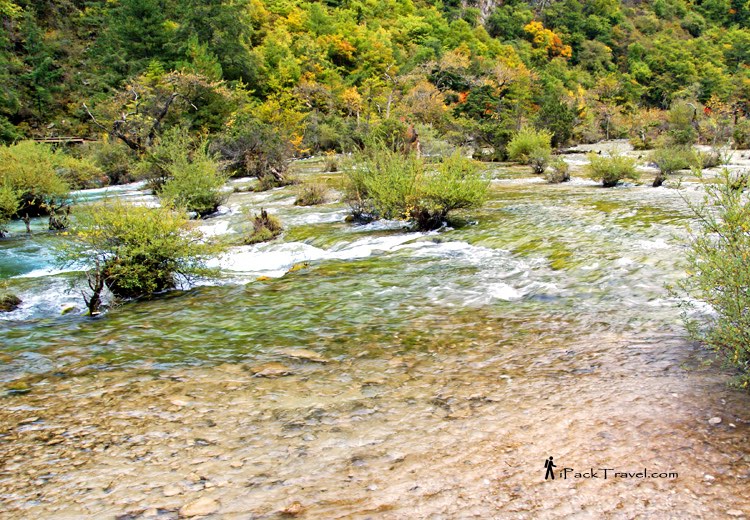
Bonsai Shoals (盆景滩)
Bonsai Shoals is the last attraction in Shuzheng Valley. There are potholes in the shoals and each hole has a plant growing from it. So, the scenery resembles many pots of bonsai growing in the river.
And the rest of the walk is right to the park exit. After alighting from the bus at Reed Lake, I was not able to get on any buses after seeing Bonsai Shoals.
The beauty of Jiuzhai Valley / Jiuzhaigou is best to be appreciated through the eyes rather than from photos.
Next:





Leave a Reply