
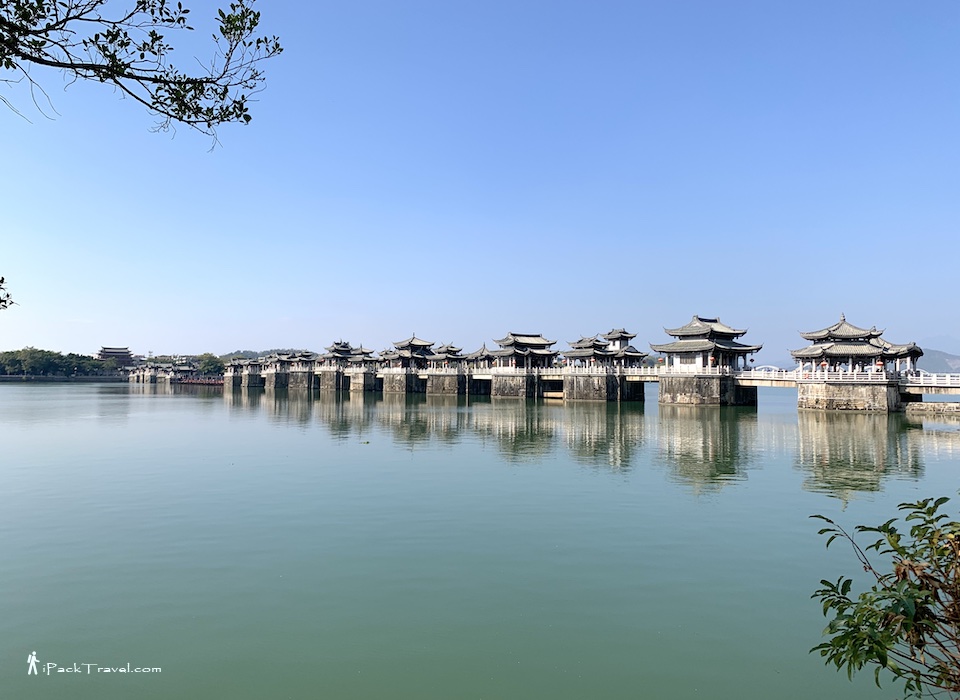
Guangji Bridge (广济桥), also known as Xiangzi Bridge (湘子桥), is a historic, iconic structure in Chaozhou, Guangdong Province, China, to the east of Chaozhou Ancient City and spanning across the Han River (韩江). Built in 1171 during the Southern Song Dynasty, the bridge is recognised as one of the Four Great Ancient Bridges of China (中国四大古桥) — alongside the Zhaozhou Bridge in Hebei (河北.赵州桥), Luoyang Bridge in Fujian (福建.洛阳桥), and Lugou Bridge in Beijing (北京.卢沟桥). Guangji Bridge is renowned for being the world’s first opening-closing pontoon bridge.
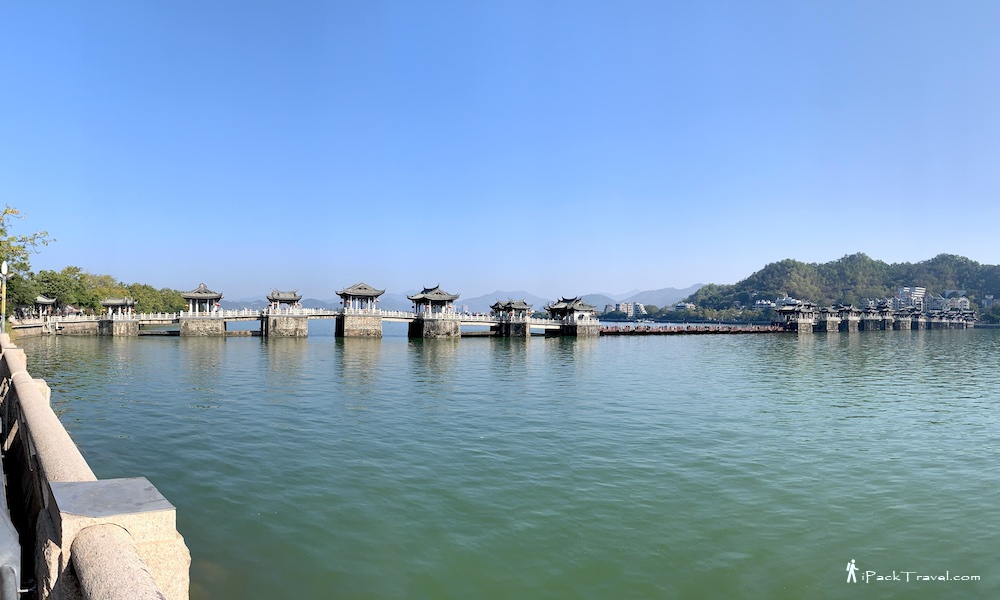
Guangji Bridge is about 518 metres in length and 7 meters wide. It consists of two western / eastern stone beam sections with 24 pavilions standing on 24 stone piers, and a central, retractable pontoon section made of 18 wooden boats — such details were written in the lyrics of a local folk song (see next section). Historically, the bridge served as a crucial transportation link and also a bustling market with vendors on the bridge itself. The nearly-900-year-old bridge gone through centuries of damage and rebuilds, and was extensively restored to its traditional aesthetic and reopened in 2007.
Local Folk Song
The local folk song goes “潮州湘桥好风流,十八梭船,二十四洲,二十四楼台,二十四样,二只鉎牛一只溜” meaning “Chaozhou Xiangzi Bridge is truly charming, 18 boats, 24 piers, 24 pavilions, 24 designs, 2 iron oxen and one slipped away”. It commemorates the bridge’s design and the loss of one iron ox statue (jump to it).
Admission Tickets
Tickets to Guangji Bridge can be purchased via the official WeChat mini program (for Chinese citizens) or physically from manned ticketing counters (easier for foreigners) at both ends of the bridge. The ticket costs CN¥20 per person one-way. A return ticket is required if you exit from the site at the other end.
Note that admission is free for visitors above 60 years of age and children with height of 1.2 metres or below, including foreign passport holders. As no tickets will be issued for free admissions, simply scan ID documents / passports to enter.
Opening Hours
Peak Season (1st February to 31st October):
- Monday ~ Friday: 10am to 5:30pm
- Weekend / Public Holiday: 9am to 5:30pm
Winter Season (1st November to 31st January):
- Monday ~ Friday: 10am to 4:30pm
- Weekend / Public Holiday: 9am to 5:30pm
Note: Last admission is 30 minutes before the closing time. The central floating pontoon section will be dismantled at closing time to allow cargo ships to sail through.
Touring the Bridge
The pavilion (as shown below) is the entrance to Guangji Bridge at the western end — facing Guangji Tower (广济楼). For those with free admissions or have booked online, simply scan ID documents / passports at the gantries to enter. For those with physical paper tickets, enter by scanning the QR codes on the tickets.
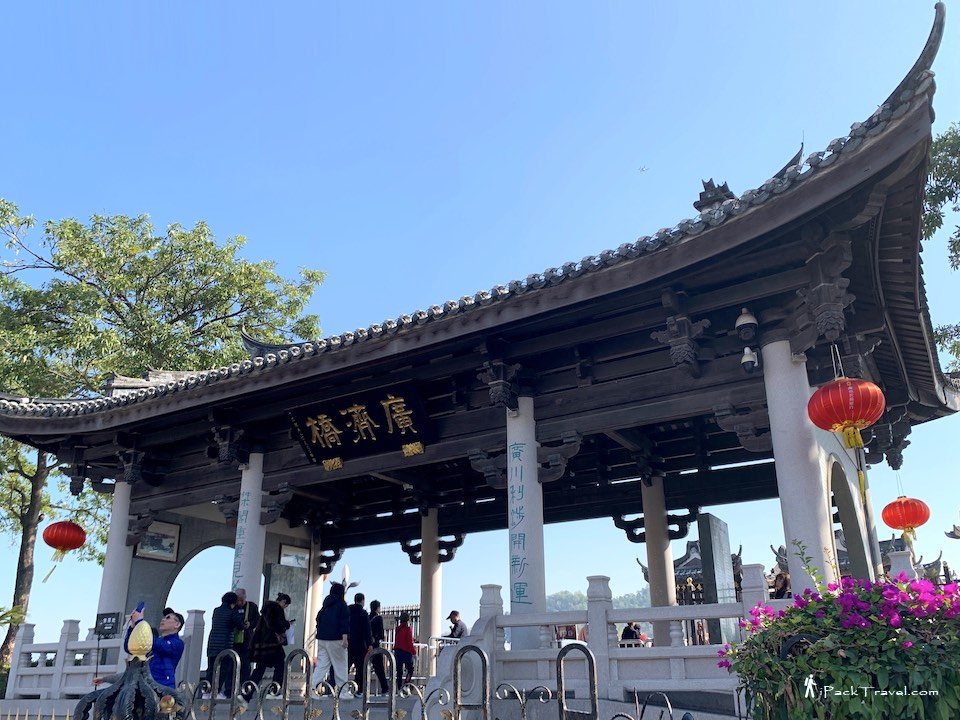
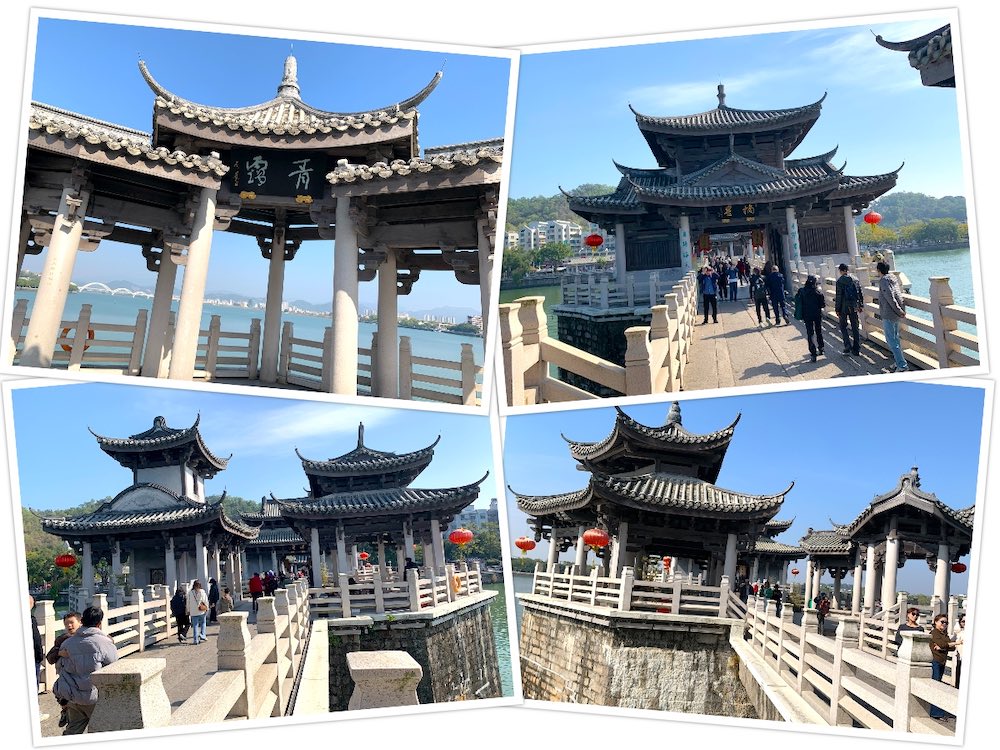
Before getting on the bridge, take in a close-up, wide view of the western section of the elegant bridge. The western section has about 8 stone piers (桥墩 / 洲), each with its own “pavilion” — either a single big pavilion or two smaller pavilions.
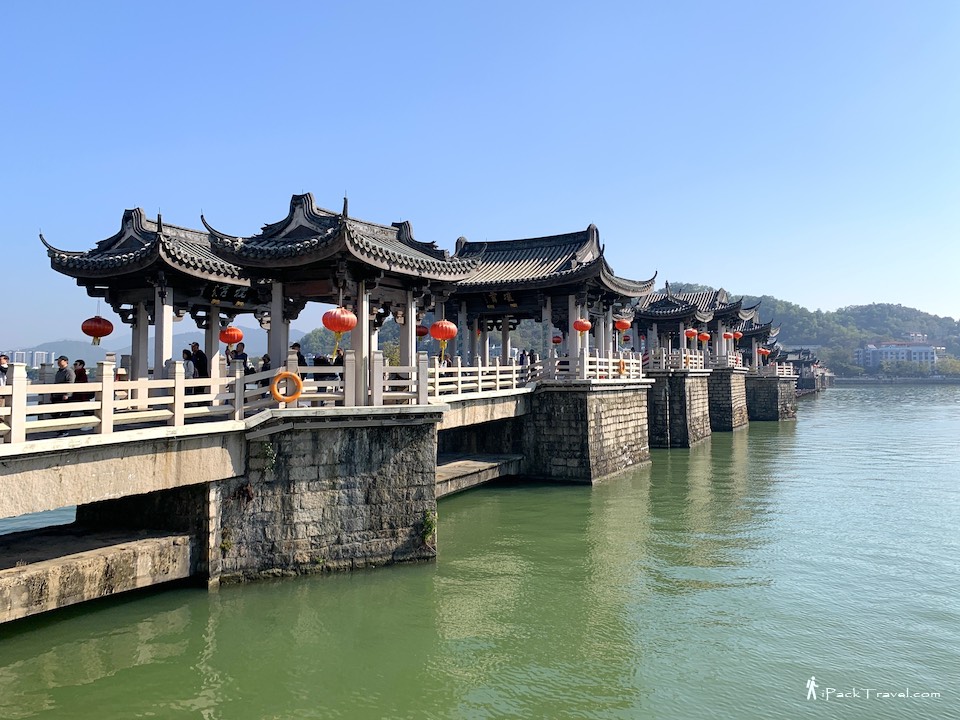
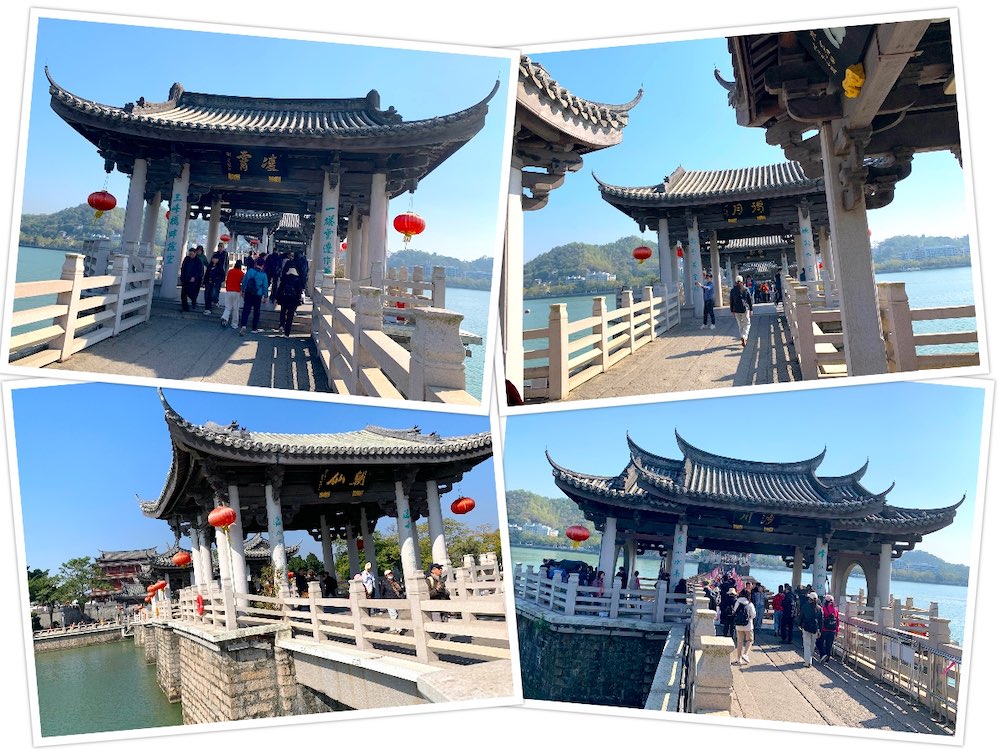
As sung in the folk song, there are a total of 24 pavilions standing on 24 piers in both the western and eastern sections and no two pavilions are identical — in fact, I was unable to count 24 piers. Check out the pavilions while strolling on the bridge. All the pavilions are poetically named with certain significance in their meanings.
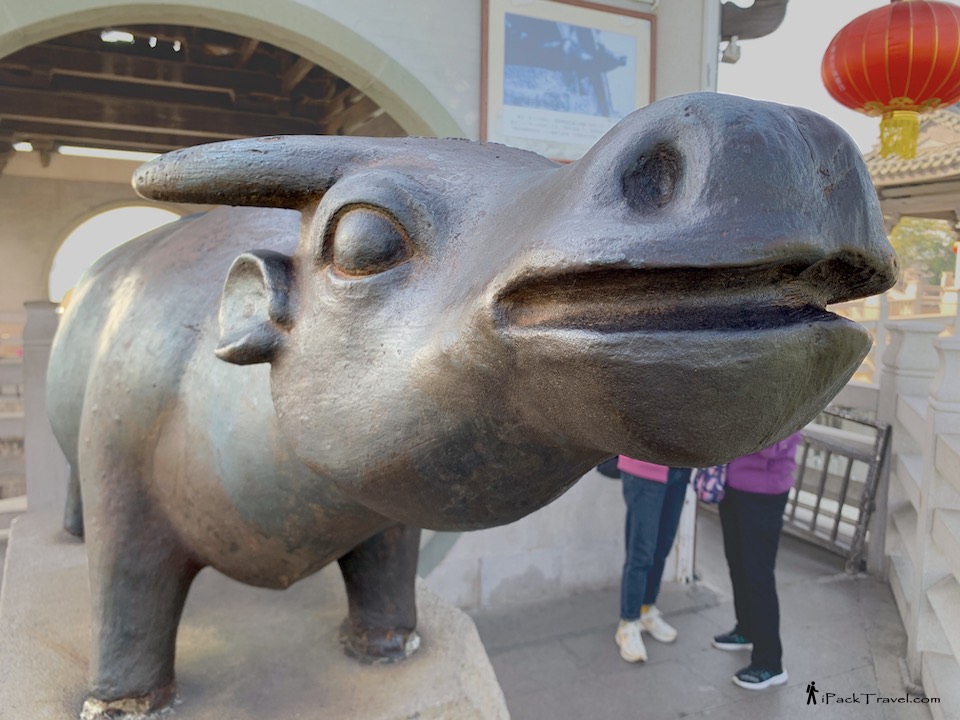
The last pavilion on the western section, before going on the floating pontoon bridge, is named “涉川 / 右通”. To the left of the pavilion stood an iron-casted oxen (铁牛) — the remaining one that did not “slip away” and stood there till this day.
During the Qing Dynasty, in 1724, two iron ox statues were placed on the eastern and western ends of the bridge as traditional Chinese symbols to “stabilise the water” and control floods. In 1842, a massive flood destroyed the eastern piers, causing the eastern iron ox to fall into the Han River and got washed away.
The folk song’s last lyric “Two iron oxen and one slipped away” briefly described the history of the two statues. It is a common belief among Chinese visitors that touching the remaining iron ox brings good luck.
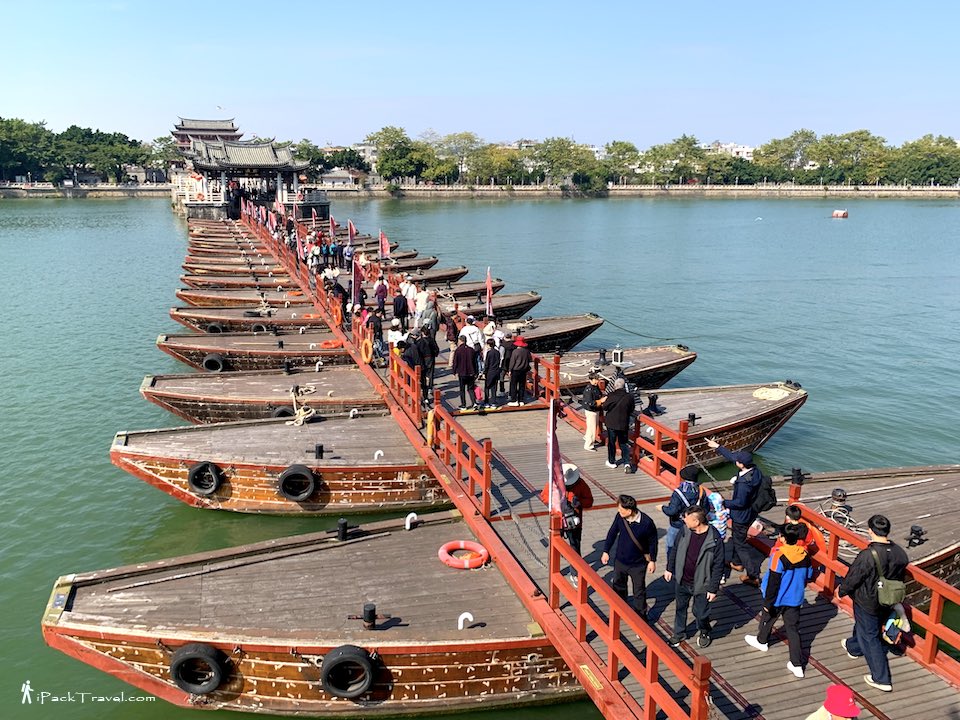
Next is the floating bridge (浮桥), which is made up of 18 interconnected pontoon boats, securely fastened with bolts and very stable.
During the Song Dynasty, in 1171, when Guangji Bridge was first built, it comprised of 86 pontoon boats and just 1 pier. Construction of the bridge continued through the centuries till the Ming Dynasty, in 1530, and resulted in the current “18 pontoon boats with 24 piers / islets” (十八梭船二十四洲).
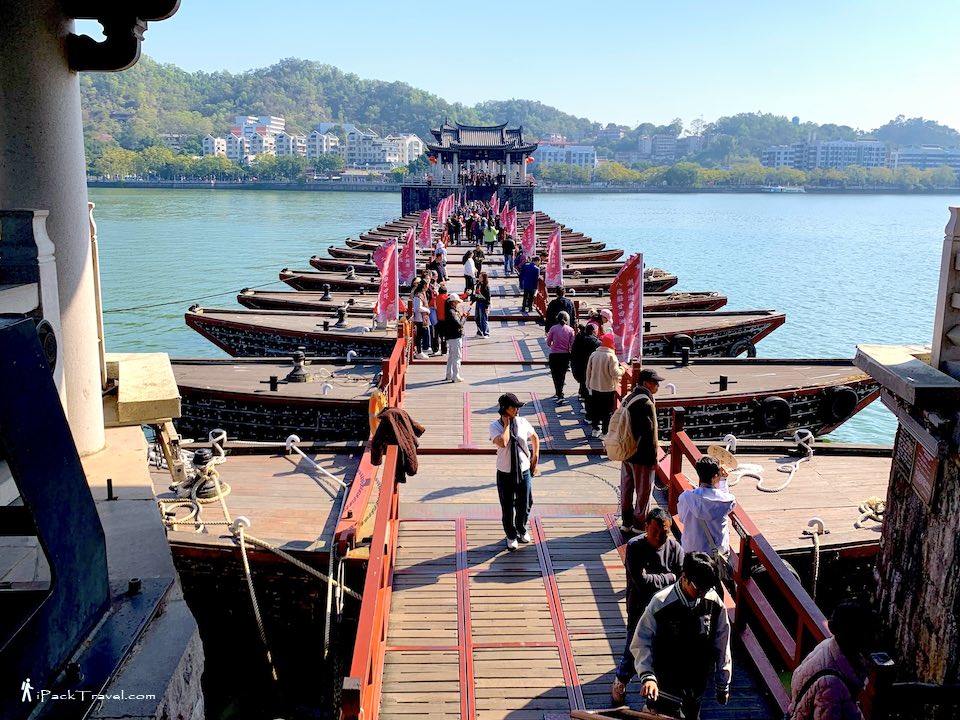
Opening the floating bridge allows passage for other boats to sail through and also to discharge floodwater. Closing the bridge connects the eastern and western shores and allows crossing of the Han River. The Guangji Bridge attraction will only be opened to visitors when the floating bridge can be connected and during calm days.
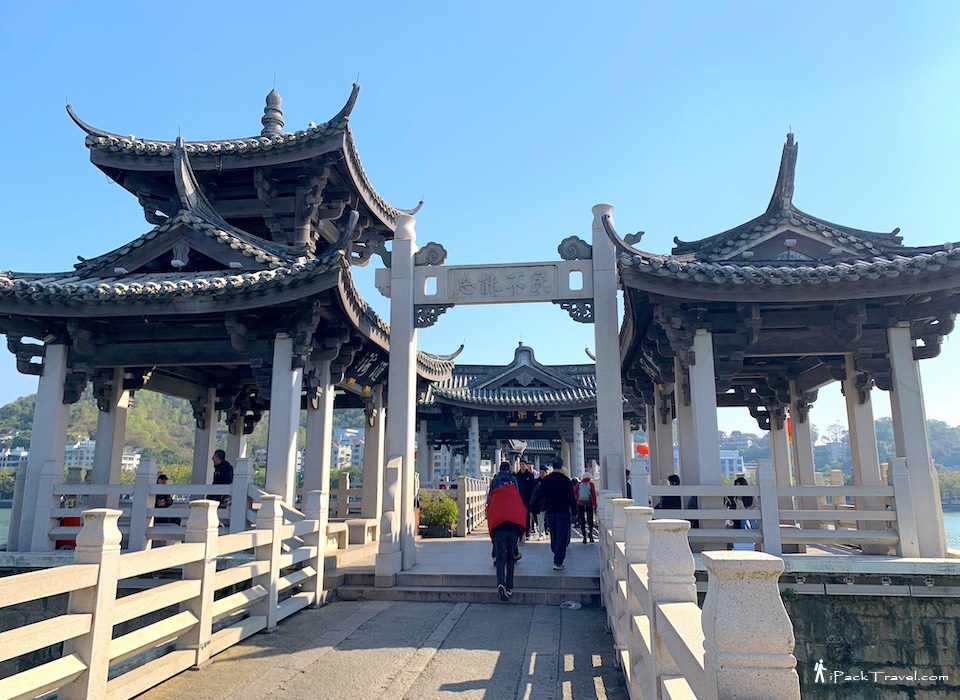
On the eastern section of the bridge, after passing the first pavilion named “左达 / 济川”, a special memorial arch, named “民不能忘” or “The People Will Not Forget”, stands between two smaller pavilions named “安澜 / 汇海” — meaning “peace and safety after overcoming the floods”. The arch was rebuilt on the bridge in 2007.
Unlike the arches in Paifang Street (牌坊街) that were built by the imperial government, this special arch was contributed and built by the local people to honour two Qing Dynasty officials who led them in rebuilding the bridge after it was destroyed by floods. The name signifies the people’s gratitude and not to forget the officials who served them well.
There are more stone piers and pavilions in the eastern section of Guangji Bridge with more designs. Several of the pavilions are much larger in size and can house one or two shops in them.
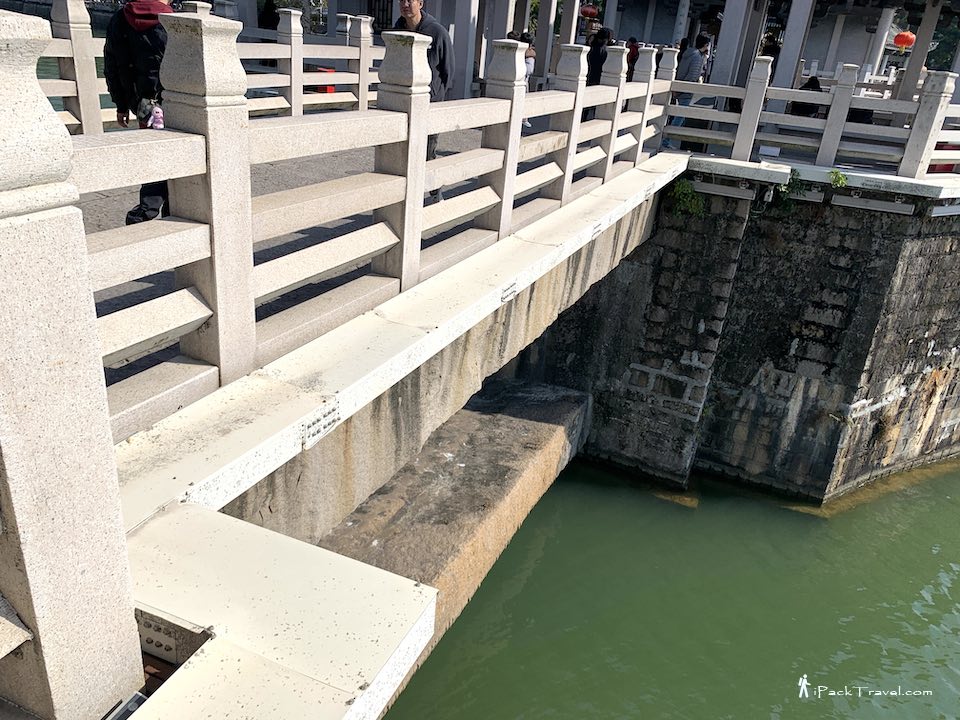
Nearer to the end of the eastern section, between two pavilions named “观滟” and “浴云”, is an ancient stone beam (古石梁) below the newer stone pathway. More ancient stone beams are exhibited near the eastern entrance.
At the end of the bridge is Yanghan Pavilion (仰韩阁), said to be built to commemorate Han Yu (韩愈), a Tang Dynasty official and poet. It is largely wooden with ancient architecture and a foundation built with stone pillars. The structure is now used as the entrance / exit of Guangji Bridge.
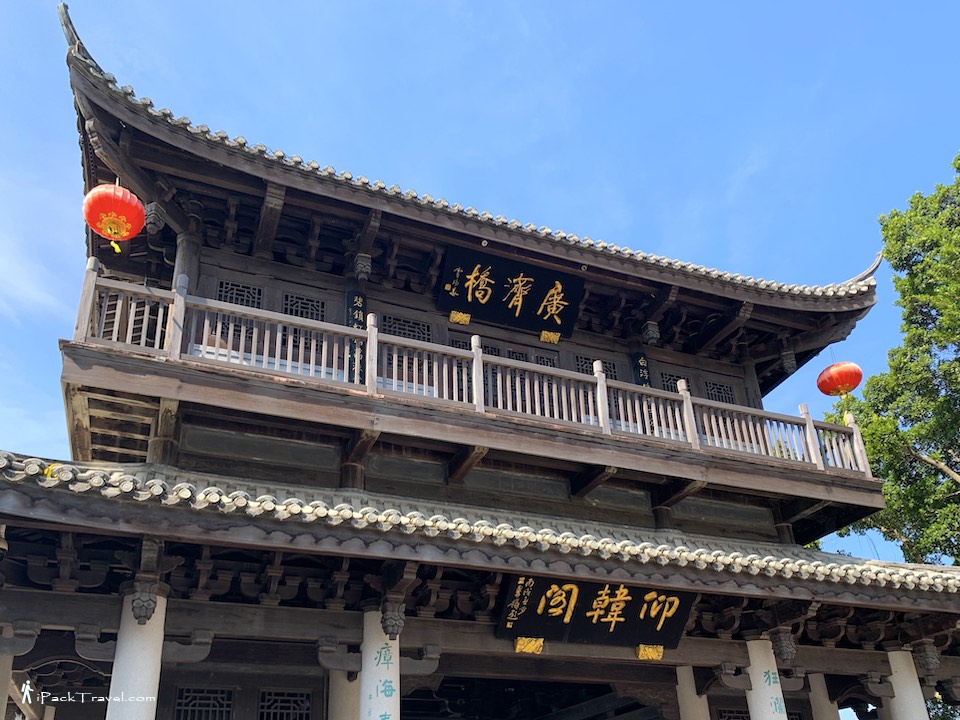
Note that Guangji Bridge’s ticket is per-entry basis. After exiting via Yanghan Pavilion, a new ticket will be required to re-enter. Otherwise, do a U-turn to return without exiting.
However, exiting from the attraction and walking along the eastern bank of Han River allows wider and better views of Guangji Bridge than from the western bank.
Light Show @ Night
Guangji Bridge Light Show (广济桥晚间灯光秀) is held daily at 8pm after nightfall — even if the attraction is closed during the day. On weekends (Friday to Sunday) and China’s public holidays, an additional session will be held at 9:30pm. Each session will last about 15 minutes. No tickets required.
In the dark night, the dazzling, colour-changing light display will illuminate the bridge, creating a vibrant night-time spectacle over the Han River. Do expect large crowds — many visitors will start to take up “positions” as early as an hour in advance.
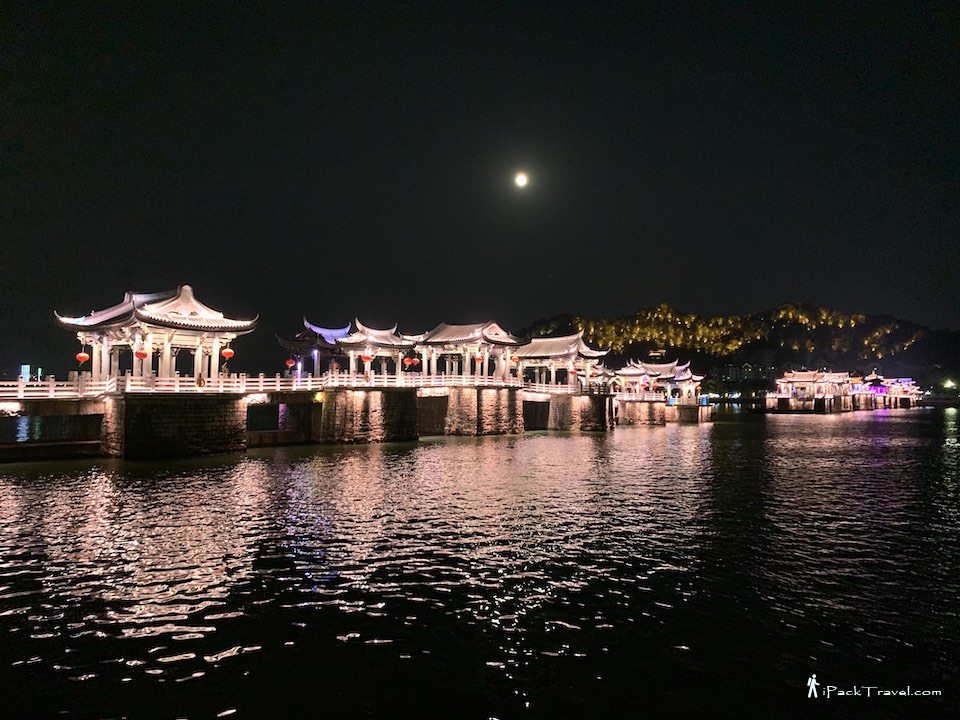
Due to large crowds and dazzling lights, the 15-minute light show may not be the best time to try to take beautiful photos of the bridge. Just enjoy the show, then wait for the crowds to disperse after the show to take nicer still photos.
One More Thing…
The attraction may be closed for a day, or days, during unfavourable weather, like typhoon, strong wind or high water level due to heavy rain upriver. When planning, say, a 3-day trip to Chaozhou, do plan to visit the bridge on the first day, or as early as possible, with remaining days as backup. And, understand China’s public holiday system to avoid large crowds — including during winter seasons.
More: China Tips: Why China Has Long Public & School Holidays, Avoid Them When Travelling
Location:
Nearby:





Leave a Reply