
Kelapa Sawit — translates to “oil palm” in Malay — is a traditional Hakka village in the northwestern part of Kulai District, Johor, about an hour’s drive from Johor Bahru checkpoint (JB CIQ). It is a vibrant town that offers a charming mix of heritage, art, and authentic Hakka cuisine.
The “Wall Art Street” in Kelapa Sawit is known to many of its visitors by generic names. The art lane comprises of two segments that meet at a cross-road junction and each lane has its own name. The rightful name of “Lane 1” is “Let’s Art at Sawit (沙威艺起来)” as displayed on the bamboo-made archway at the intersection. “Let’s Art at Sawit” is an initiative in 2014 to revitalise the former 1949 Hakka settlement, turning it into a tourist attraction.
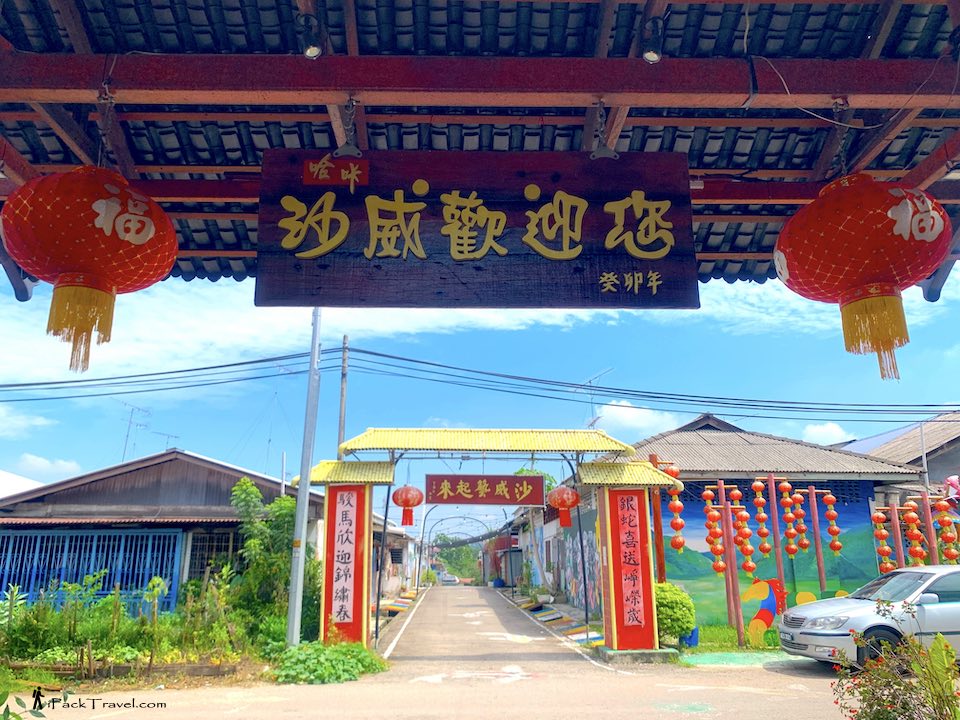
Let’s start with “Lane 1”, which is a back lane that lies between two rows of residential houses.
Many murals lined the two walls along the sides of the artistic lane, some are paintings, some are non-painted artworks, some with real-life objects for visitors to interact with the artworks and also a “male lion head” art piece featuring detailed carving of the lion’s face. Some of the artworks feature scenes in Fujian Province of China, where the ancestors of the local Hakka communities had migrated from.
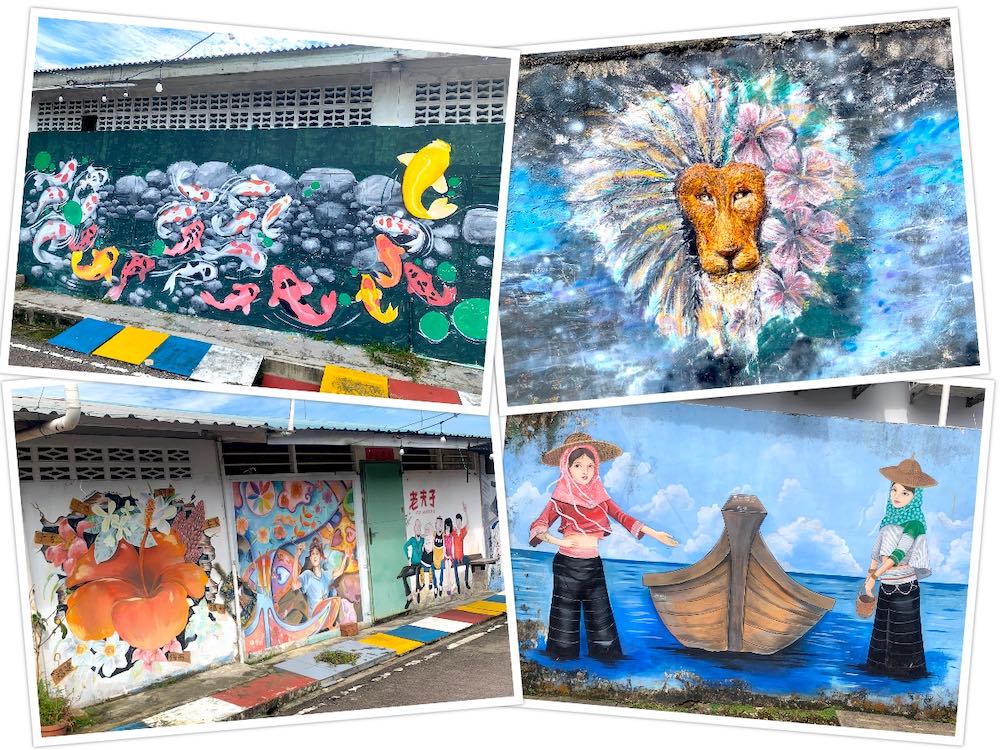
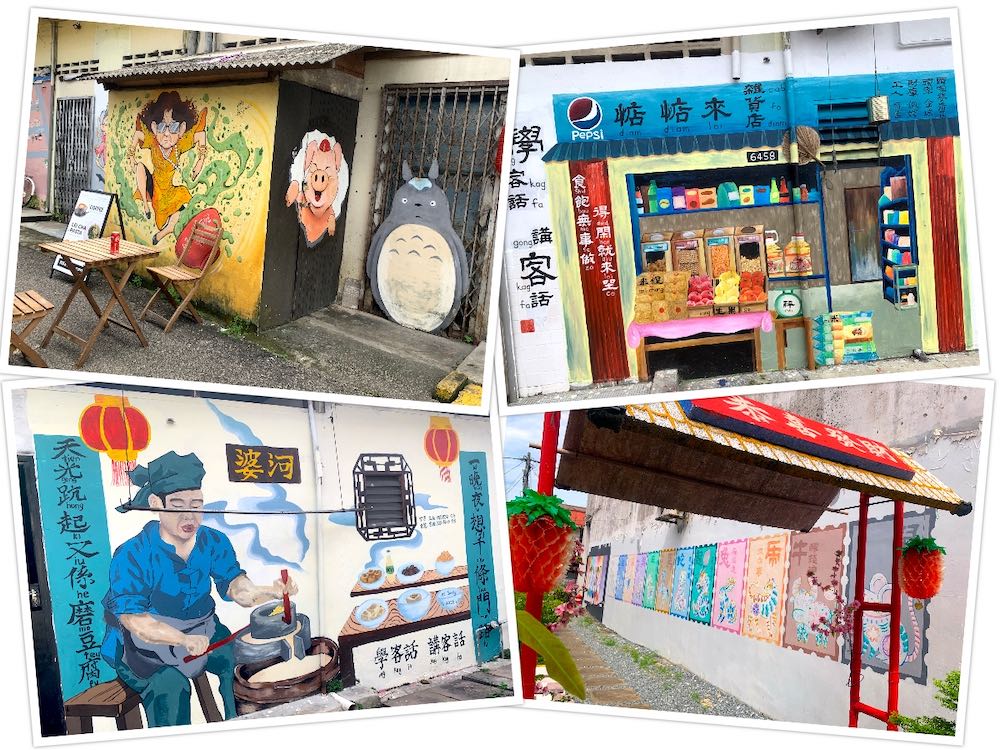
There are also murals depicting local culture with Chinese phrases and their corresponding pronunciations in the Hakka language — even so, trying to pronounce the words correctly is very challenging. The use of Traditional Chinese characters is itself a major challenge to many Chinese, especially the younger generations.

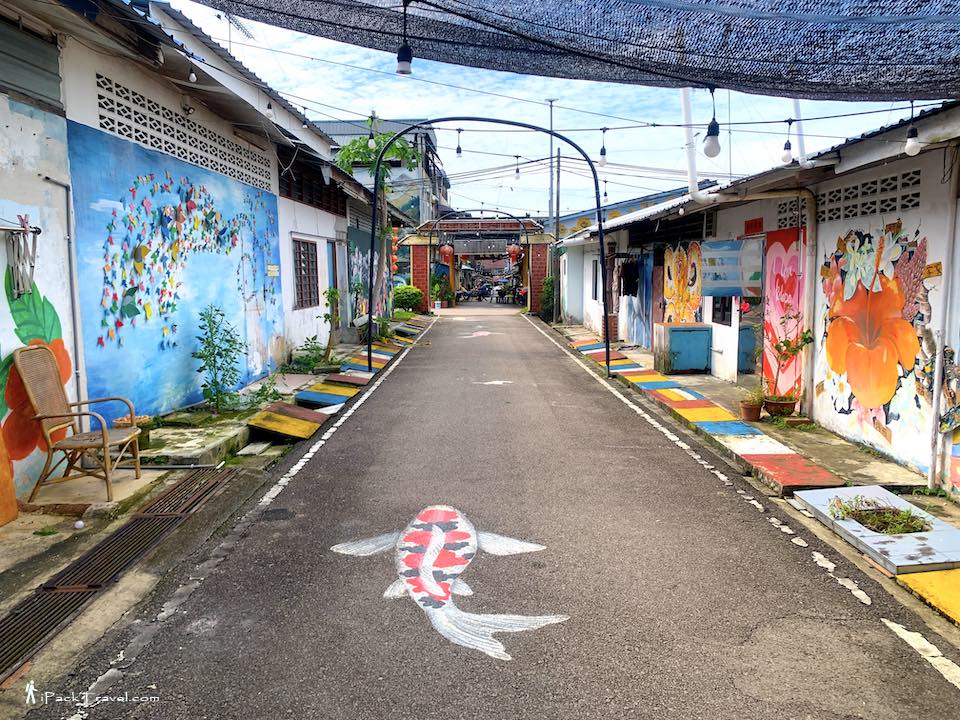
Aside from arts on the walls, paintings of koi fishes on the walkway swim towards the intersection point between the two segments of the art lane. Instead of arrows or footprints, these “fishes” are acting as “guides” to direct visitors to the start point. The fishes in Lane 2 swim towards the intersection too, meeting the fishes from Lane 1 and circling there.
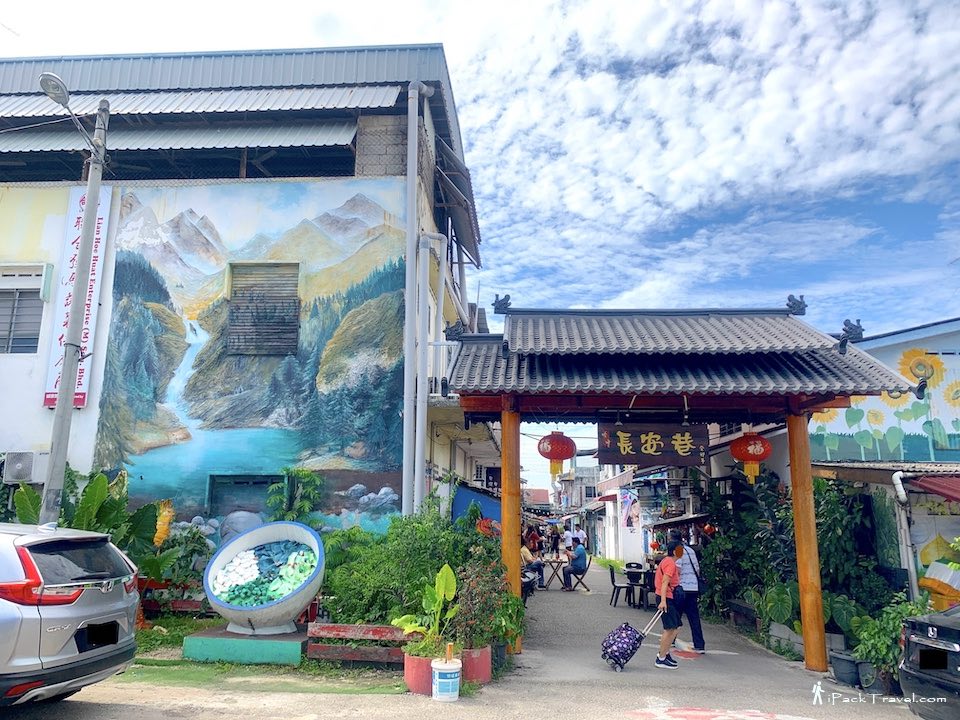
The second segment of the art lane is fronted by a relatively-new archway, which identifies the lane as Chang’an Alley (长安巷). It is said that before the name “Kelapa Sawit” was coined, due to a oil palm plantation nearby, the village was known as Chang’an Village (长安村). Naming the lane as “Chang’an Alley” served as a memoir. In Chinese, chang’an translates to “eternal peace” — and definitely much better than “Oil Palm Lane 2”.
Beside the archway is a large mural depicting natural scenery with mountains and a waterfall — for feng shui, I guess. Below the mural is a large mock-up of a bowl of lei cha (ground tea rice or erroneously translated as “thunder tea rice”), a representative Hakka dish.
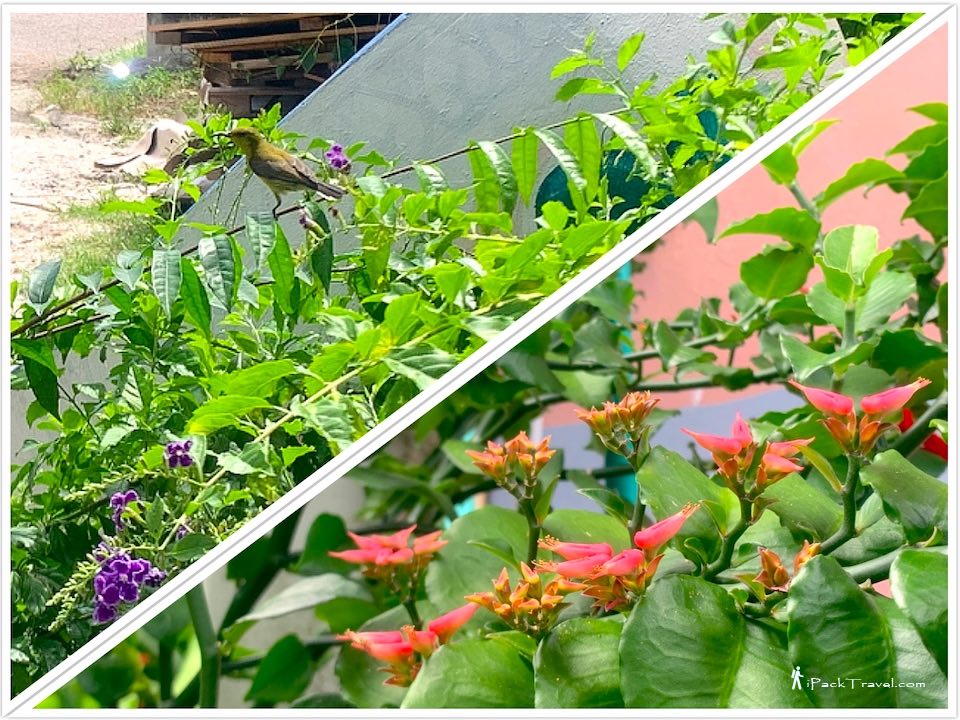
A surprise find is a pot of Little Bird Flower (天堂鸟 / 小鸟花) right beside the archway. Its pink petals are like tiny birds and it attracted small birds — I was lucky to spot a sunbird at the same time.
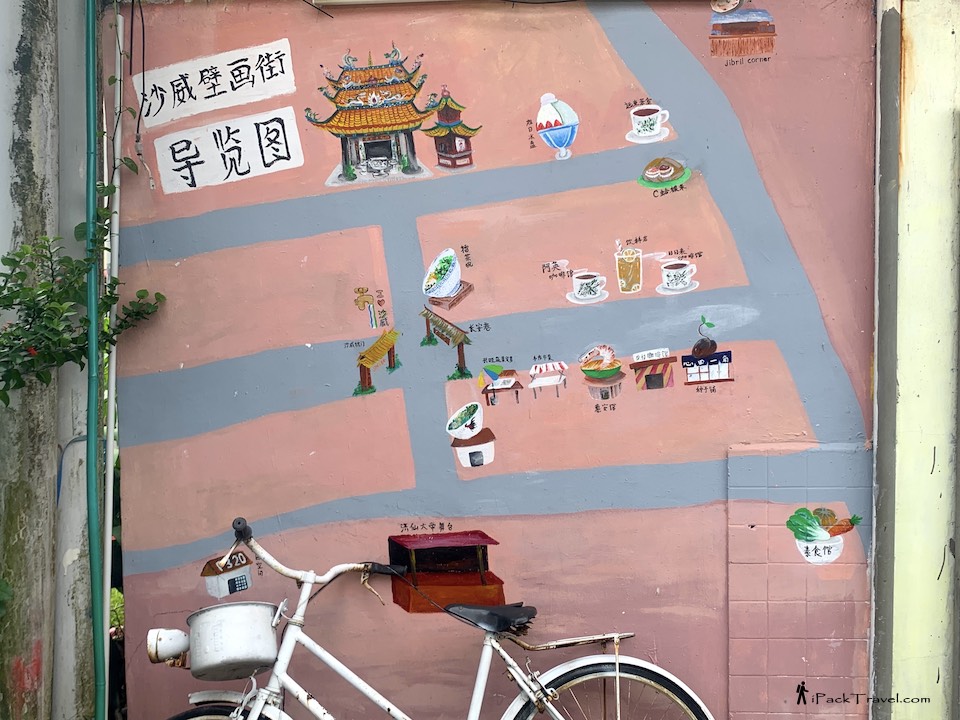
The first mural inside Chang’an Alley depicts a guide map of “Sawit Wall Art Street (沙威壁画街)”. It shows Chang’an Alley with a number of coffee shops, cafes, shops, stalls and also a Chinese temple (洪仙大帝庙) and a performance stage (洪仙大帝舞台) in adajacent lanes.
Along Chang’an Alley are more murals, which are more exquisite. Most of them seem to be newly painted.
Aside from street arts, the coffee shops and eateries along Chang’an Alley serve Hakka dishes among other local Chinese dishes — their signature dishes are lei cha (擂茶), yong tau foo (酿豆腐) and choy ban (菜板). Some visitors prefer to sit along the back lane and enjoy their coffees and meals in the laid-back atmosphere instead of dining inside the shops. Local produces, like sweet potatoes, banana, passion fruits, guava, gac fruit (木鳖果), bottled honey, vegetables, etc, are also sold here.
One of the eateries serving Hakka delights with take-aways Hakka pastries is Kedai Makanan Hakka Sawit (好客坊), right next to the archway.
More: Kulai Eat: Hakka Sawit (好客坊) Hakka Delights @ Kelapa Sawit
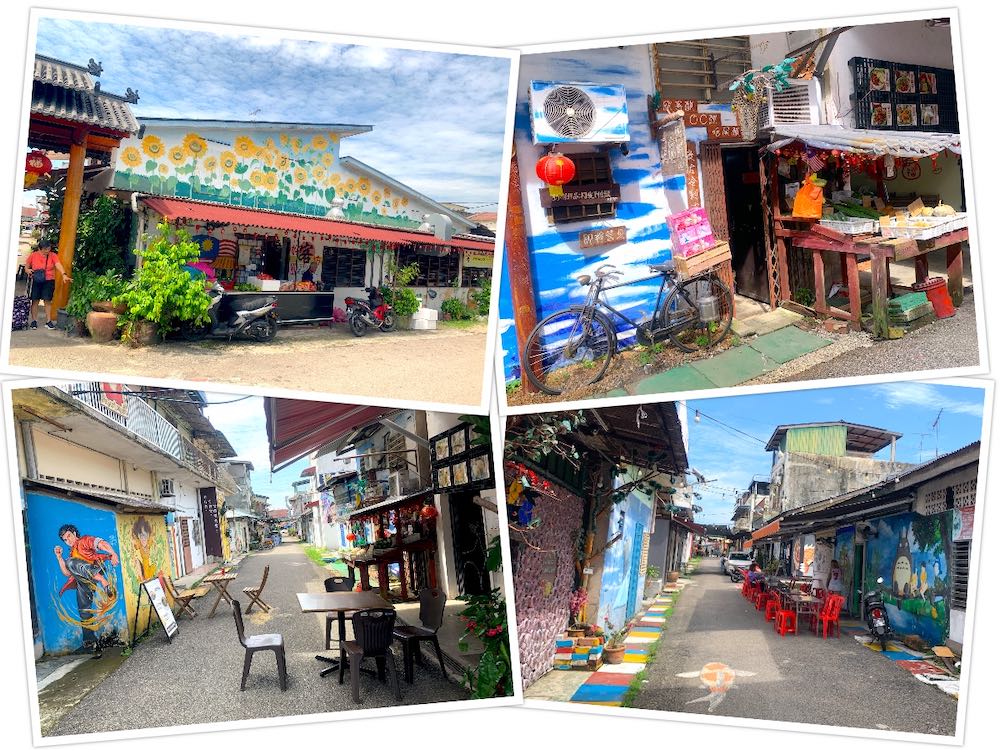
This is a very WOW place that awaits you — well, that’s what the Chinese words are saying: “一个很哇塞的地方等你”.
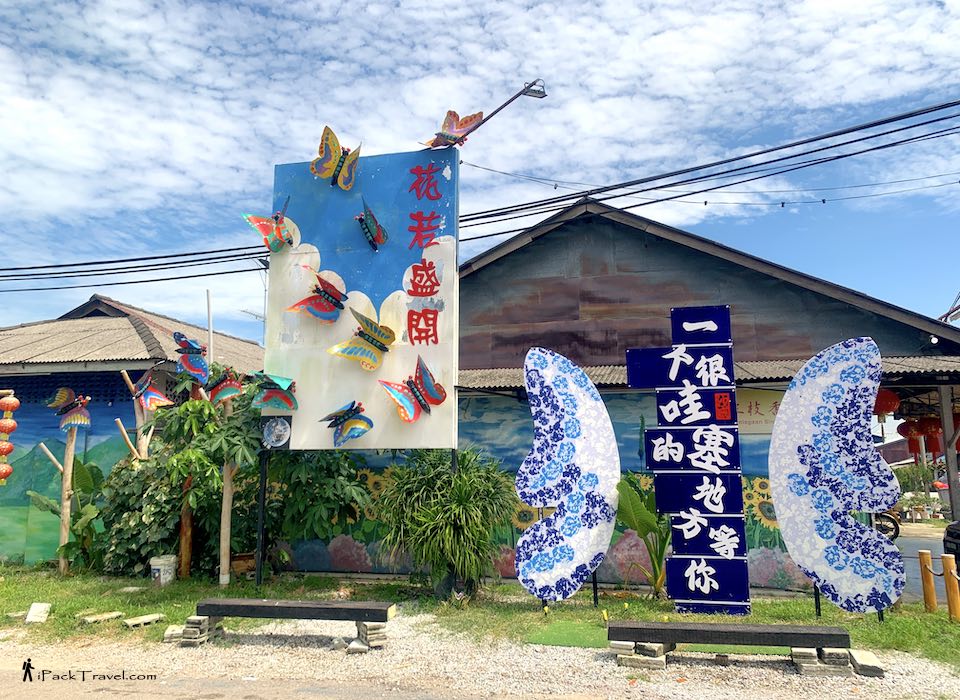
“Kelapa Sawit Wall Art Street” is not very long and takes less than 15 minutes to walk from one end to the other. When visiting the art lane, slow down the walking pace and appreciate the arts, understand Hakka culture and enjoy authentic Hakka cuisine. Weekdays are more serene and quiet times, whereas weekends will have more crowds but most of the stalls and shops will be opened too.
Address:
Back lane between Jalan Kelapa Sawit 2 & 3, Kampung Sri Paya, 81000 Kulai, Johor, Malaysia
Opening Hours:
24 Hours
How to Get There:
- From Larkin Sentral, take CityBus 2 direct to Kelapa Sawit.
- From JB Sentral, take BAS.MY J30 to Kulai Bus Terminal and change to CityBus 2.
- Read: JB Bus / Train: To Kulai District in Johor (柔佛.古来)
Next:
Eats @ Kulai:




Leave a Reply