
I have done a couple of food quests before to hunt for Hokkien mee and laksa dishes, in Singapore and Malaysia, which are part of my travel objectives. Over a span of 2 months, I did another food quest to seek out Johor-specialty dishes within the state of Johor, which include popular dishes created in Johor Bahru, Pontian, Muar, etc.
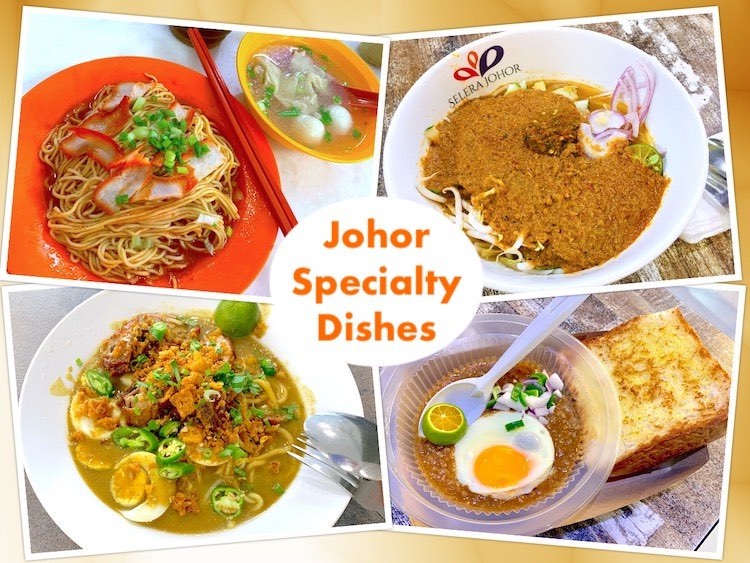
I consolidated a list of 8 Johor-specialty dishes — so far, and more will be added. Some of these dishes may be available in Singapore or other parts of Malaysia, but I seek out the most authentic flavours while travelling around Johor. Check them out.
1. Laksa Johor
Laksa Johor is said to be created by Sultan Abu Bakar of Johor in the late 19th century due to his love for Italian spaghetti. His royal chef created a Malay-style broth for the spaghetti, resulting in a fusion dish. Local Malays claimed this as the “royal” laksa Johor.
Laksa Johor is prepared by placing cooked spaghetti and fresh ingredients (cucumber, onions, beansprouts, etc) in a bowl before adding thick gravy-broth on them. Many ingredients are ground to make the laksa paste, including fish, dried prawns, chillies, etc. The spicy broth carries a citrusy flavour that resembles assam laksa — but it is from lemongrass. This flavourful dish is easily mistaken as vegetarian since no meat is observed.
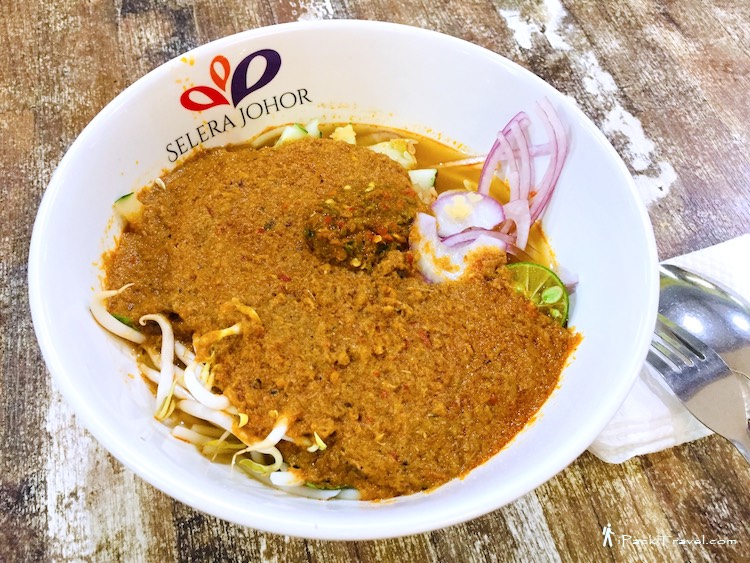
It was said that the process to prepare the thick gravy paste is so tedious that very few places are willing to sell it. Well, seek and you shall find!
Many articles claimed that “Johor laksa” and “laksa Johor” refers to the same thing — that is language wise. On the ground, “Johor laksa” refers to soup-based laksa dishes that was created in Johor or by Johorians, and the “royal” laksa Johor refers to the spaghetti version. Find a “Johor Laksa” stall and be served with a laksa dish similar to Nyonya laksa — that is how I was convinced they are different.
Where to try it?
2. Kacang Pool
Kacang pool is believed to have originated from an Egyptian dish, called Ful medames, a stew of fava beans (or broad beans), with other ingredients that is widely eaten across the Middle East, North Africa and the Mediterranean. The Malaysian twist of the Egyptian dish is popular in Johor.
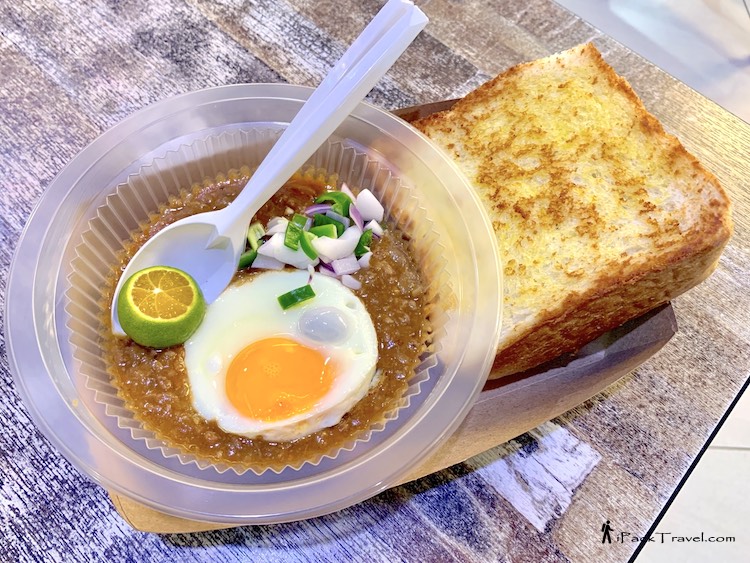
Kacang pool added minced beef, or other meat, to the thick bean stew and is often served with a sunny-side-up egg and toasted bread for breakfast. A lime adds extra flavours. To eat, use hands to tear a piece of the toast and use it to scoop up some of the sweet-savoury stew.
Where to try it?
3. Mee Rebus Johor
The origin of mee rebus is much debated. Some said it is known as mee jawa in Java, Indonesia, yet there are few resemblance. Some said it was created in northern Malaysia and brought to the southern lands. Another version claimed that it was peddled by Indian Muslim immigrants in the early days. But, mee rebus Johor was created in Johor.
Mee rebus is typically served using yellow noodle, added with a whole / half hard-boiled egg and bean sprouts, and covered with a thick sweet-potato-based gravy made from tiny shrimps, herbs and spices. Toppings usually include a lime and sambal chilli (optional). The Johor-version of mee rebus uses mashed tapioca and beef stock to prepare the rich gravy, giving the dish different flavours. Another characteristics of mee rebus Johor is the addition of crispy fried bits that add some crunchiness to the dish.
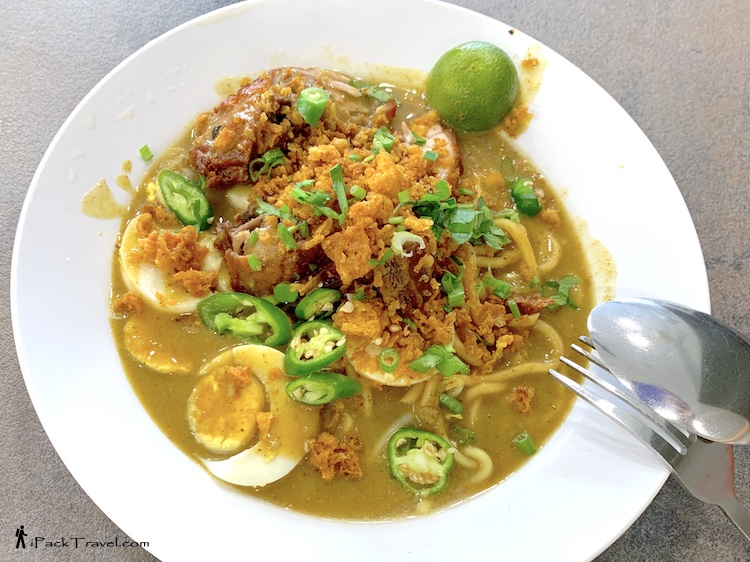
The original recipe of mee rebus Johor was pioneered by Wak Baidali in 1918, who peddled the noodles across the streets of Johor Bahru. His son, Haji Wahid, opened a stall named “Mee Rebus Haji Wahid” in the 1930s and his family / descendant started a restaurant in 1977, named “Zainal Mee Rebus” — later rebranded as “Zainal’s Place” — to offer their mee rebus.
Another variant of mee rebus Johor is called mee rebus Stulang Laut, created in Stulang Laut (near JB CIQ) by a Johorian, who used to work for Mee Rebus Haji Wahid, with a different gravy recipe. The stall later moved to Selera Johor in Plaza Larkin under the name “Mi Rebus Stulang Laut”.
Where to try them?
4. San Lou Mee Hoon (三楼米粉)
In 1979, a Johorian chef, named Ah Kaw (阿九), created a dry-style rice vermicelli dish and served it in an old estate known as San Lou (三楼) due to the large number of 3-storey residential buildings in that area. The dish became popular and was coined as san lou mee hoon (三楼米粉) — translated as “three-storey rice vermicelli”, not “三捞”, meaning “three tosses” in Cantonese, which is a cooking style originated in Singapore.
The dry-style rice vermicelli dish is stir-fried with egg, chicken meat, prawns, slices of fishcake, greens, dark sauce, etc, and served in “clustered” pieces — the rice vermicelli are compressed and bonded together by the fried sauce. The key characteristic of the dish is its strong wok-aroma with savoury flavours.
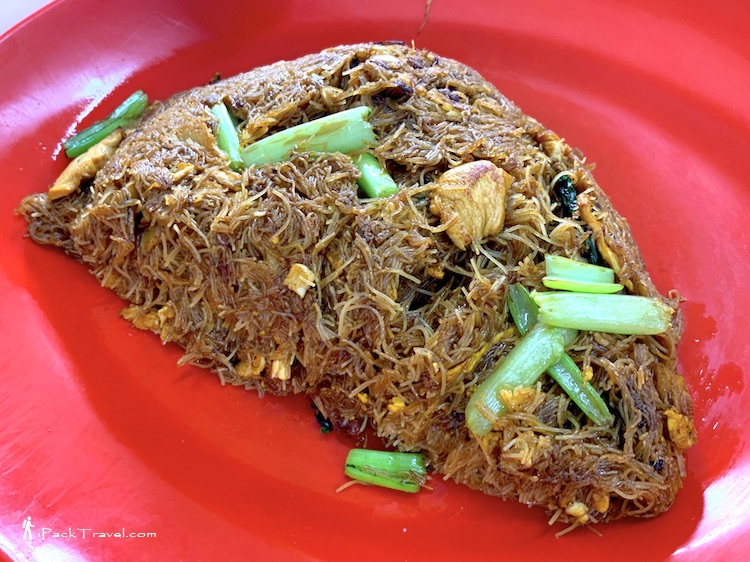
Due to its popularity, san lou mee hoon is served in many Chinese zi char (cooked food) restaurants in Johor Bahru. Restoran Ah Kaw is the restaurant of the Johorian chef who created the original version.
Where to try it?
5. Pontian Wanton Mee
Wanton mee, or “meat dumpling noodle”, of Cantonese origin is a common dish in Southern China and Southeast Asia where there are large Chinese populations. The noodle dish is typically served with char siew (barbecue pork / chicken) on thin egg noodle, dry-tossed in light sauce, and with shrimp / meat dumplings in a separate bowl of soup.
Created by Mr Loh, the pioneer of Pontian wanton noodle and founder of Heng Heng and Ah Chuan noodle houses, in 1948, the Pontian-style dish deviates from other norms by using a sauce that is a mixture of tomato ketchup, light soy sauce, oyster sauce, sesame oil, etc, for tossing with handmade egg noodle. The char siew used is typically boiled rather than grilled, very thinly cut, leaner and, although paler in appearance, is tender and juicy. Aside from meat dumplings, fishballs may also be added.
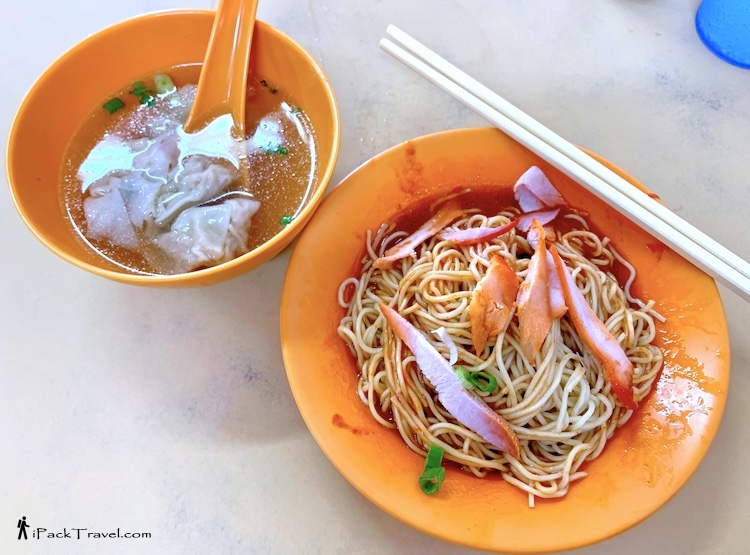
In Pontian, other flavours of wanton mee can also be found, aside from the tomato-based Pontian-style wanton mee, and they are all called “Pontian wanton mee“. By default, tomato-based sauce will be used.
Nevertheless, there is another variant of Pontian wanton mee using black pepper in the sauce, giving a strong peppery-spicy flavour to the popular dish. It is created by Sin Kee Noodle House (新記笨珍雲吞麵) and is also another Johor-specialty.
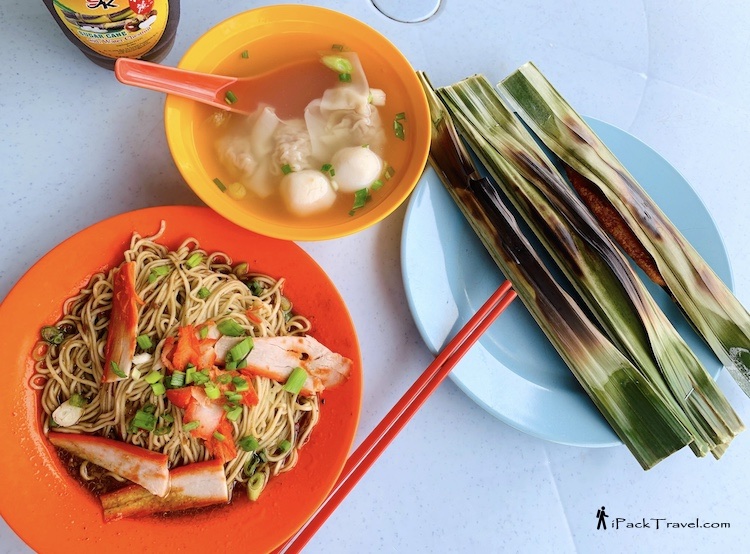
Where to try them?
6. Muar Otak-Otak
Otak-otak, sometimes spelled as otah-otah, is a popular Southeast Asian (Singapore, Malaysia & Indonesia) dish, of Peranakan origin, consisting of ground fish or other seafood (prawn, calamari, etc), spices, and coconut milk. Typical otak-otak are usually wrapped in banana leaves, like a parcel, and grilled or steamed before serving. The dish is usually spicy-savoury and with a smoky flavour (if grilled).
The Muar version of otak-otak is smaller in size and wrapped in slim nipah palm leaves. These sticks of Muar otak-otak are faster to grill as compared to the banana-leave-wrapped version and easier to eat as snacks or as accompaniment to meals.
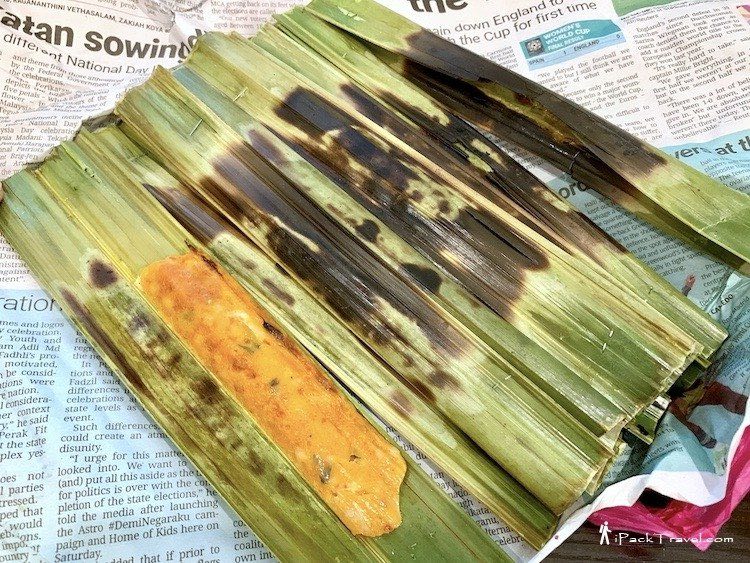
By the way, “otak” means “brain” in Bahasa Melayu. The name “otak-otak” was coined in the early days due to minced fish paste looking like brain matters. So, when addressing the food, it is often termed as “otak-otak” instead of just “otak” — if you ask locals “where to find otak?” off-handedly, they may probably point at their heads.
Where to try it?
7. Mee Bandung
Mee bandung originated in Muar and is another true blue Muar- or Johor-specialty dish. The noodle dish typically uses yellow noodle with an egg and greens and drenched in a thick gravy-broth. Other ingredients such as seafood, fishcake or chicken may also be added. The gravy-broth is made from finely-ground dried shrimp (key ingredient), spices, chillies, etc, giving well-balanced flavours of spiciness, sweetness and savouriness and, of course, the aroma and taste of dried shrimp.
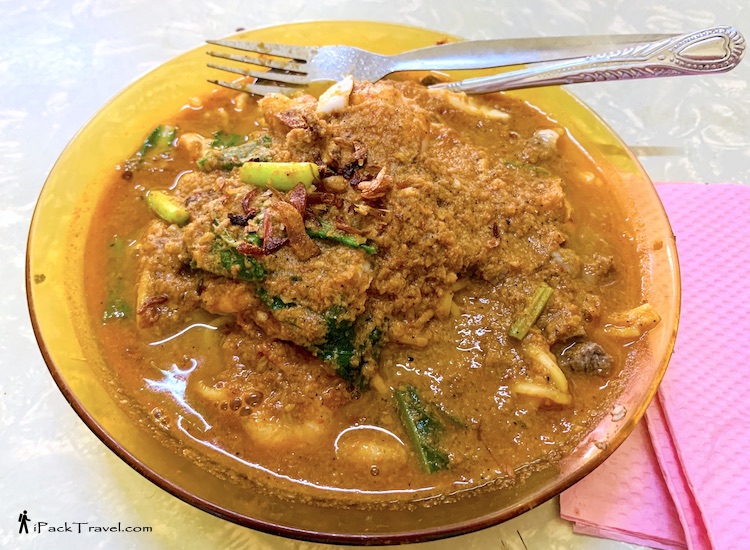
Note that mee bandung has nothing to do with Bandung (万隆), a city in West Java of Indonesia, although some restaurants translated the name of the dish as “万隆面” in Chinese for ease of referencing the dish. “Bandung” is a Malay word for “mixture” or “combined”, referring to how the gravy-broth is made with a mixture of ingredients.
Where to try it?
8. Mee Siput (Snail Cracker)
Mee siput, another Muar-specialty, was created in the 1950s in Muar. The old-school snack is handmade using long strips of noodle-like dough and deep-fried until crispy — like crackers — and the final product looks like the shell of a snail (siput). The crispy cracker is near-tasteless and should be eaten with its accompanying sauce, which is typically sambal chilli. However, the sambal chilli has different tastes by different makers and may be sweet, sweet-spicy or sheer spicy with additional flavours added.
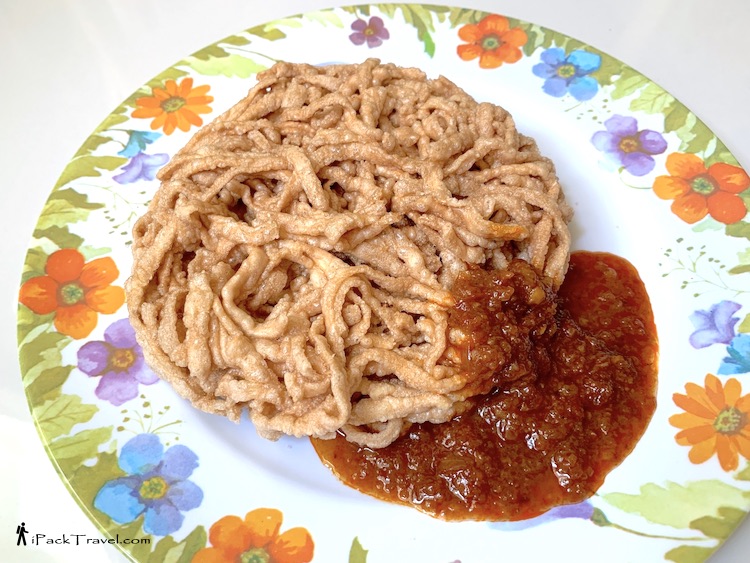
As a specialty snack of Muar, mee siput is widely available in restaurants, coffee shops, product shops and also the food stalls along Muar Food Street.
Where to try it?
I am sure there are more Johor specialty dishes in some corners of Johor waiting for me to discover. And, I will add them to this list after I have tried them, like I did for other food quests.
Next:

Leave a Reply