
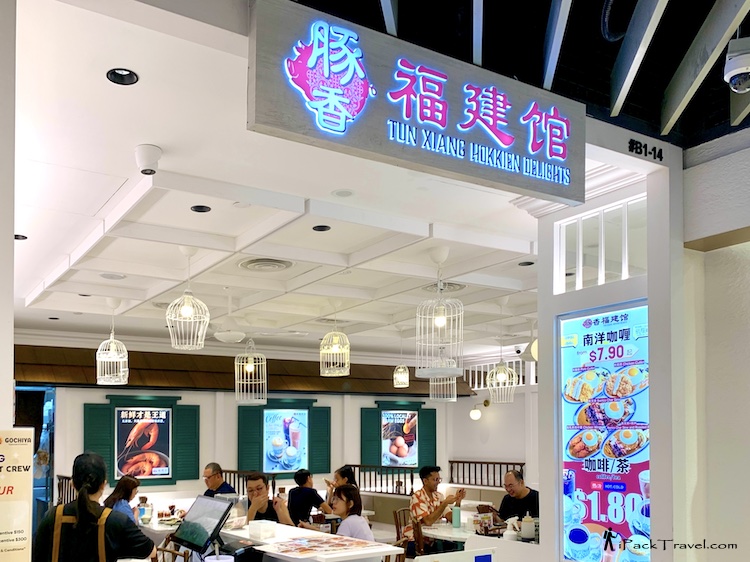
Tun Xiang Hokkien Delights (豚香福建馆) is a popular restaurant chain serving delectable, authentic Hokkien-style pork dishes and Hokkien mee, and has several outlets in Singapore. Most of its outlets are located in the east side of Singapore with a newer one in the west — in the basement of West Mall, Bukit Batok Central. The West Mall outlet is divided into two sections, one being Tun Xiang serving Hokkien delights and the other is Gochiya, serving Japanese-style teppanyaki and tonkatsu. Both uses Iberico pork in most of their dishes.
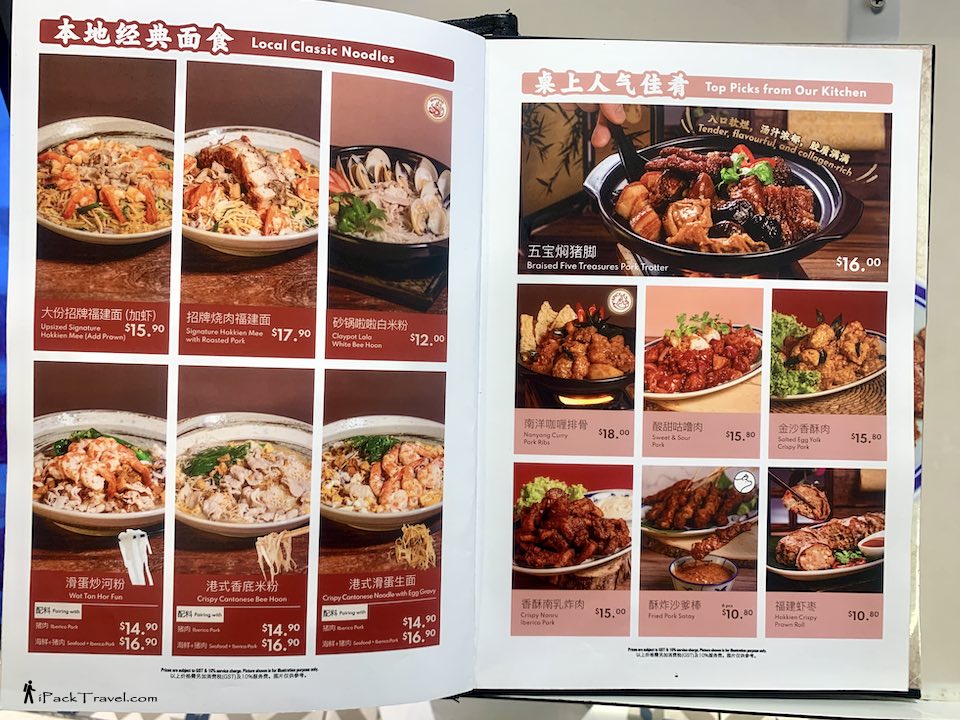
Tun Xiang’s specialties are mostly Hokkien dishes, including pig’s trotter vinegar, claypot sesame oil chicken, Singapore-style Hokkien mee, etc. All pork dishes use Iberico pork (from black Iberica pig). Tun Xiang runs promotions where bundled sets of 2 or 3 dishes are rolled out regularly at cheaper prices.
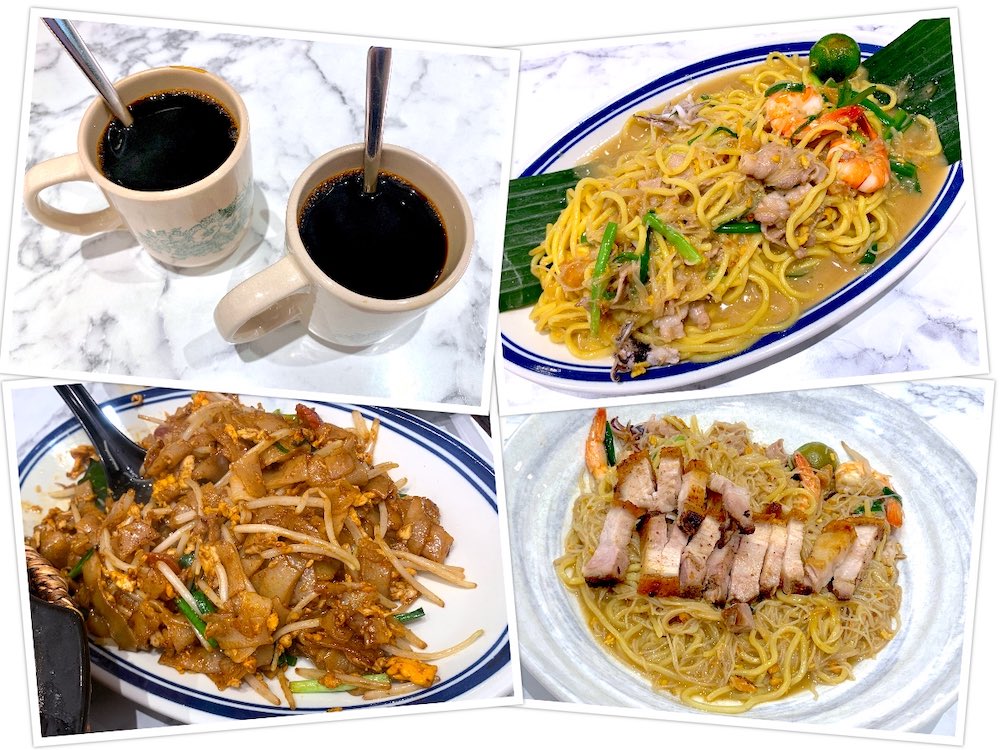
Top-left: Tun Xiang serves Nanyang traditional coffee (南洋咖啡). The kopi-O is thick, not bitter and with nice aroma.
Top-right: The Signature Hokkien Mee (招牌黑猪福建面) uses a larger proportion of yellow noodle than thin rice vermicelli to stir-fry with prawns, calamari, egg, Iberico pork slices and spring onions. The wet dish is rich in flavours with a nice wok aroma. The use of Iberico pork slices, instead of pork belly shreds, gives the noodle dish additional textures.
Bottom-left: The Char Keuy Teow (炒粿条) is a Singapore-style sweet-savoury dish using sliced Chinese pork sausage, lean pork slices, egg, bean sprouts and spring onions to stir-fried with kway teow. It is non-oily with subtle wok aroma and mellow flavours of the sausage and egg.
Bottom-right: A variant of the Hokkien mee is the Signature Hokkien Mee with Roasted Pork (招牌烧肉福建面). The Hokkien mee has same ingredients as before and slightly drier. The savoury roasted pork is very tender with crispy skin and not too salty.
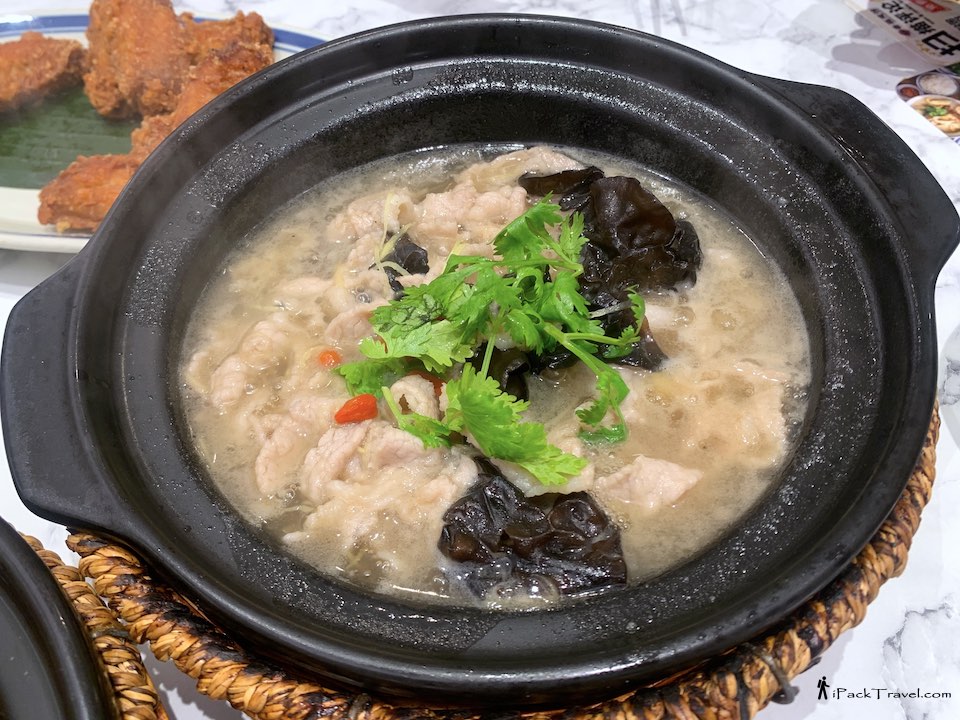
The Yellow Rice Wine Pork (黄酒姜丝猪肉) is another Tun Xiang specialty dish. Generous amount of lean Iberico pork slices are cooked in claypot with black fungus, shredded ginger, wolf berries and yellow rice wine without adding any water or sugar. The finished dish has strong fragrance of the rice wine soup, which has turned sweet after boiling and added with mellow “herbal” flavours of wolf berries and ginger. This is delicious and highly recommended — I love dishes cooked with fragrant rice wine.
The Pig’s Trotter Vinegar (猪脚醋) — with a selection for either “regular”, “extra” or “double” for vinegar intensity — is served in a claypot. The pig’s trotter is well-braised till the meat is tender with very soft skin, but not mushy. The braised vinegar sauce is not salty and has pleasant acidity level for “regular” vinegar — we drank all of it.
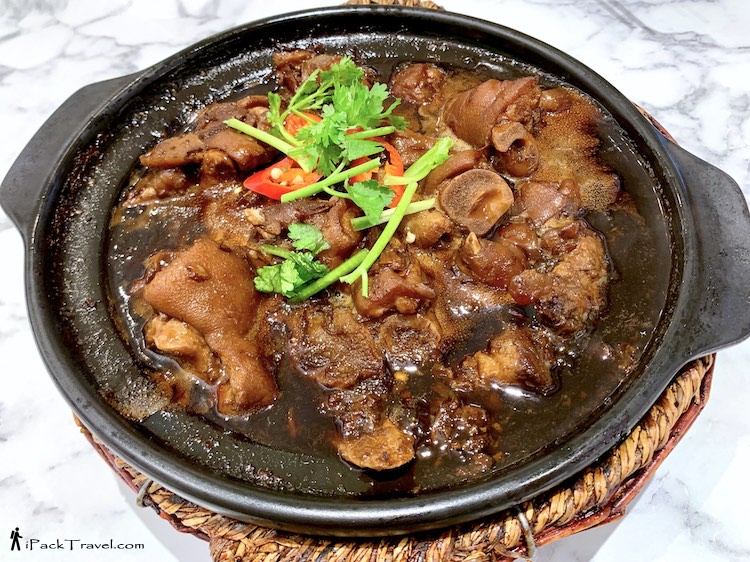
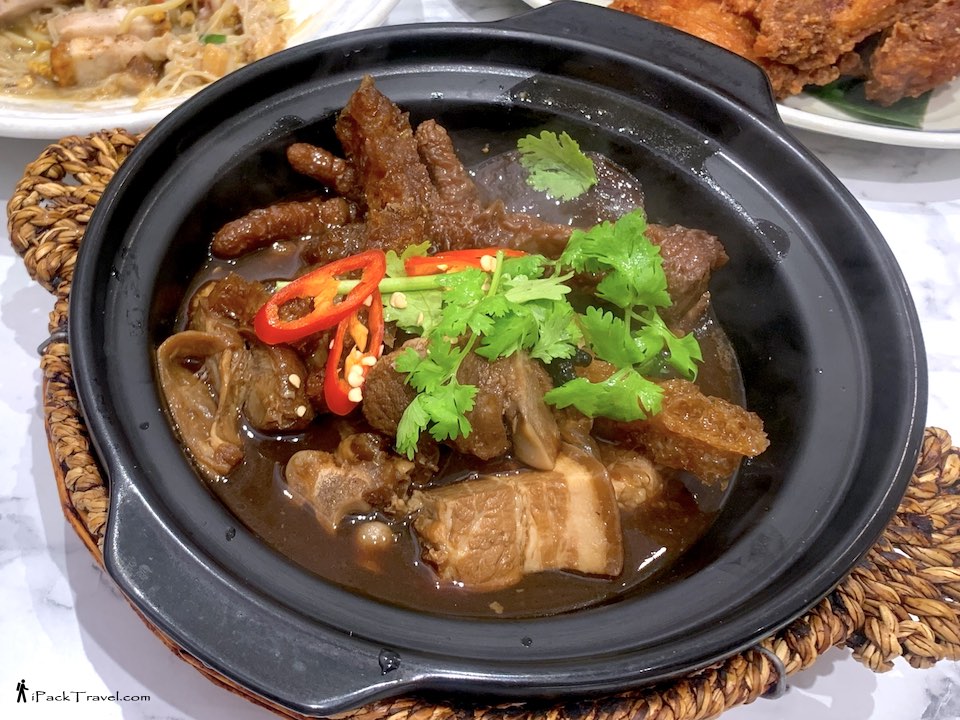
The Braised Five Treasures Pork Trotter (五宝焖猪脚) is another Tun Xiang signature dish and is a collagen-rich dish with simmered pork trotter, braised chicken feet, pork belly meat, pig skin, mushroom, tofu skin, etc, in a thick, sweet-savoury gravy with complex flavours from lots of ingredients. The meats are soft and very tender and the skins literally melt in the mouth. Need good complexion? Don’t miss this dish.
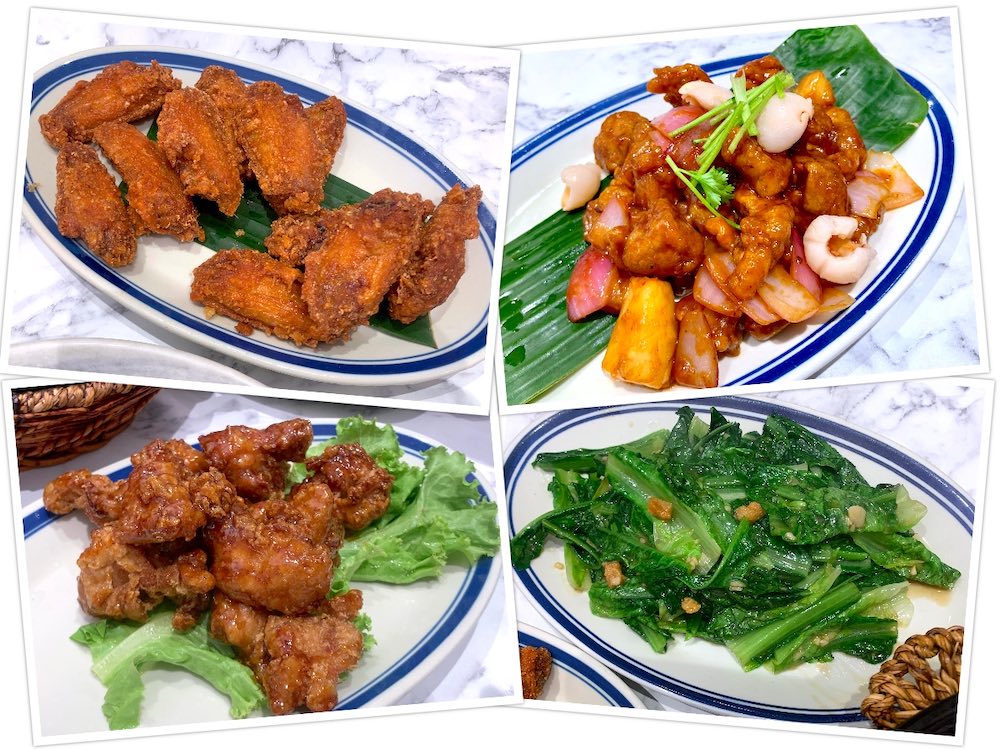
Top-left: The Deep-Fried Nanru Chicken (南乳炸鸡翅) is served with chicken wings that are well-fried till crispy with mellow fermented beancurd flavour. They are non-oily, not too salty and kids’ favourite.
Top-right: The Sweet & Sour Pork (咕噜肉) uses fried lean pork to stir-fry with pineapple, sweet shallots and lychee in sweet and sour sauce. The fried pork, fully coated with the thick sauce, is tender with some crispiness and the sauce has well-balanced sweetness and sourness.
Bottom-left: The Marmite Chicken (妈麦鸡) is another deep-fried chicken dish using chunky chicken meat to fried with savoury Marmite paste and coated in sweet syrup. This is more a sweet dish with light savoury flavour of the yeast extract.
Bottom-right: The You Mai Cai (油麦菜) is an aromatic and flavourful vegetable dish. The stir-fried yau mak chye (Chinese lettuce) exudes its own fragrance and sweetness added with flavours of garlic and fried pork lard.
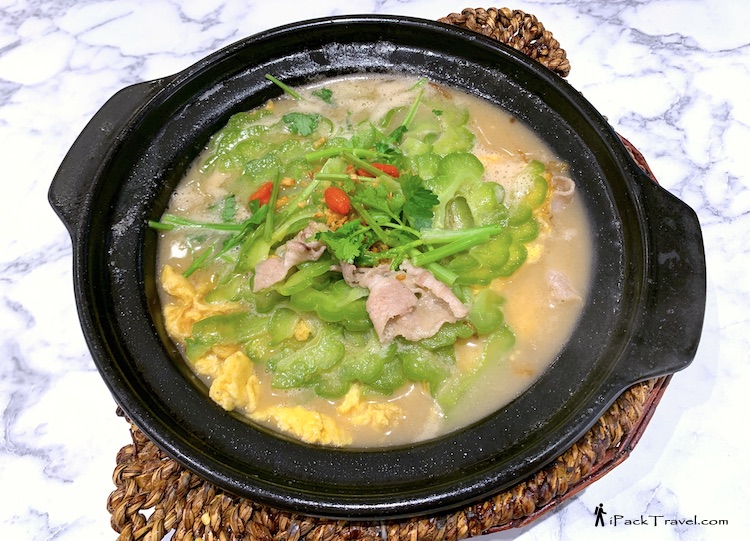
The Bitter Gourd on Smooth Eggs (苦瓜滑蛋) is served in a claypot too with a large piece of omelette submerged in the soup with wolf berries, slices of bitter gourd and Iberico pork slices. The soup is savoury with mild-bitterness from the bitter gourd and the omelette absorbs the soup to enhance its flavours. This dish is different from the “stir-fried bitter gourd with egg” dish that we are familiar with.
Tun Xiang Hokkien Delights’s Singapore-Hokkien dishes are delicious with authentic flavours and less salt. And their prices are comparable to zi-char stalls.
Do you know?
Many people believe that the Chinese word “豚” means “dolphin (海豚)” or “puffer fish (河豚)” and find it weird that many Japanese restaurants use the word “豚” to name pork dishes. The word “豚” actually means “little / suckling pig” in Chinese but it is rarely used in modern Chinese communities — preferring to use “小猪” for little pig in relation to adult pig (猪) — and resulting in the misunderstandings that the Japanese use it erroneously.
Social Media:
Facebook | Instagram
Address:
West Mall, #B1-14
1 Bukit Batok Central, Singapore 658713
Opening Hours:
10am to 9:30pm (Fri & Sat till 10pm) | Daily
Nearby:
More Eats @ West Mall:

Leave a Reply