
Staged / numbered public bus services are the cheapest way to get around Johor Bahru. These services used to be managed by multiple bus companies in the past but are now under one umbrella, operated by Causeway Link, and branded as BAS.MY (Johor Bahru). For frequent visitors to Johor Bahru, using the cheaper BAS.MY bus services saves money in the long run.
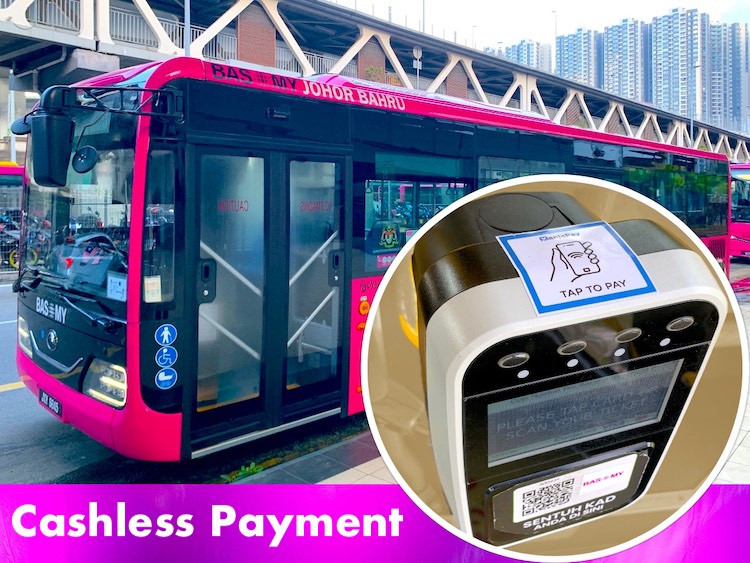
In this post, we will explore the cashless payment methods available onboard BAS.MY (JB and Malacca) and Singapore-Johor cross-border services by Causeway Link from a (Singapore) traveller perspective — locals will probably have more ways to pay but those methods may not be accessible to foreigners.
Why Go Cashless?
Payment for public bus fares using cash is probably the easiest way, especially for non-frequent visitors to Johor Bahru. There is no need to worry about technology, mobile data network, phone battery… and top-ups.
The biggest downside of using cash — you will need to find out the amount to pay for each bus ride. That involves telling the bus driver (mostly Malay-speaking) exactly where you want to go — if it is not a well-known landmark and if he/she can converse using a common language. After overcoming the communication barrier, you will need exact small notes and shillings for the bus fare as change will not be given, or pay extra — e.g. paying a RM1.60 bus fare with RM2 or RM5 in notes because you are short of 10- or 20-sen.
Years ago, before BAS.MY came into play, I boarded a bus and told the Indian bus driver that I wanted to go to Taman Sri Tebrau, he scratched his head, and then quoted the bus fare as RM2.20, and I paid. After reaching the bus-stop opposite Taman Sri Tebrau, I alighted. Another passenger, who heard the exchange between me and the bus driver and alighted at the same bus-stop as me, told me the fare should only be RM1.30 and most locals are used to saying “Dai Mah Garden” instead of “Taman Sri Tebrau”. RM2.20 was the fare to Taman Desa Tebrau, where Tebrau City is.
Cashless methods, like Singapore’s EZ-Link card or credit cards, can avoid miscommunications and the hassles to find exact amount to pay for the bus fares — simply board the bus, tap, and tap again before alighting. Another reason being the flexibility to cut-short or extend a bus journey, due to last-minute change of mind on where to go, without having to waste or top-up the bus fare.
Another reason being that all cross-border bus services managed by Causeway Link will become fully cashless very soon — latest by end-2026. Notices have been put up at boarding points to inform passengers about the change.
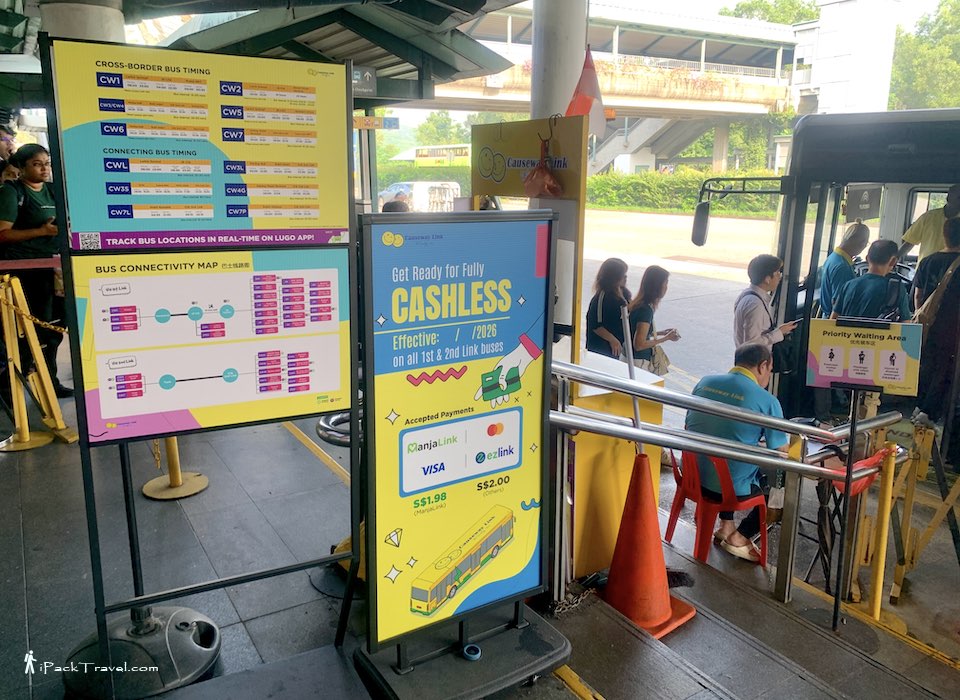
Let’s see what are the cashless methods available.
1. ManjaLink Card
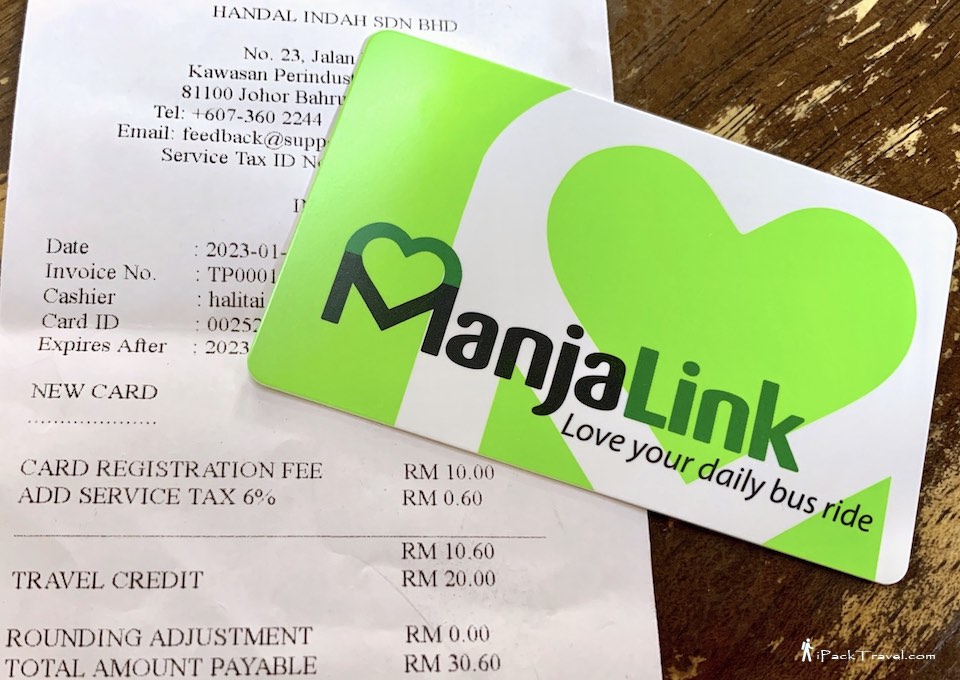
ManjaLink card is a cashless fare card, like Singapore’s EZ-Link card, that can be used to pay for bus fares on Causeway Link bus services, including BAS.MY and cross-border services. For those who travel frequently to Johor Bahru, and also Malacca, and using Causeway Link’s public bus services, this card makes travelling around the cities easier.
A new ManjaLink card costs RM30.80 (effective 1st March 2024) — with a RM20 travel credits and RM10.80 being the card registration fee and 8% Sales & Service Tax (SST) — and is available at ManjaLink service kiosks in Johor Bahru, Malacca and Singapore. Tap the card on the fare readers (below the screen) when boarding and alighting from BAS.MY buses — but don’t tap on alighting from cross-border services and Senai Airport Service AA1. Top-up the card (minimum is RM30) at any ManjaLink kiosks when credits run low.
The remaining amount and transaction history of a ManjaLink card can be monitored via LUGO app from authorised app stores. LUGO app also provides a ManjaPay mobile payment solution that can be used to make fare payments on BAS.MY bus services (see next section).
Topping-up of ManjaLink card can be performed using LUGO app via a Travel Credit Reload Card (available at Causeway Link service counters) or BetterPay online payment (through credit / debit card, Touch ‘n Go e-wallet, ShopeePay, Alipay, WeChat Pay, etc) — transaction fees may apply for non-Malaysia-issued credit cards.
I find it easier to top-up ManjaLink card at the manned kiosks — at JB Sentral Bus Terminal or KSL City Mall — using YouTrip debit card. I have also tried topping-up using BetterPay in LUGO app through YouTrip and Touch ‘n Go eWallet without incurring any transaction fees.
One more thing, using ManjaLink card enjoys discounted fares dished out by Causeway Link (more details) — this is similar to using EZ-Link card where fares are cheaper than using cash and other forms of payment.
More info: Manja website
2. ManjaPay
ManjaPay, powered by LUGO app, is a card-less digital payment system launched by Causeway Link. It uses contactless NFC technology on smartphones to allow passengers to scan and pay onboard Causeway Link’s BAS.MY bus services in Johor Bahru and Malacca, but not on cross-border bus services. Like ManjaLink, ManjaPay enjoys discounted fares too.
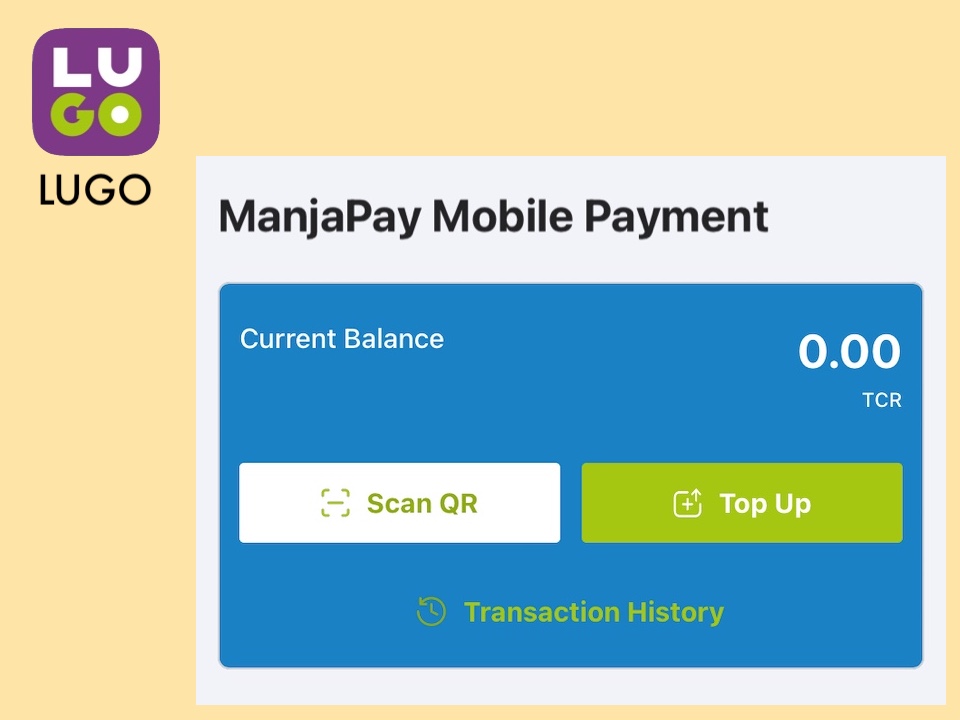
Both ManjaLink and ManjaPay are two separate entities and travel credits are non-transferable between them — i.e. the funds in a ManjaPay eWallet cannot be used to top-up a ManjaLink card, and vice versa.
Topping-up ManjaPay is the same as ManjaLink — through Travel Credit Reload Card or BetterPay. Minimum top-up amount is RM30 and there is no “card” registration fee since it is card-less. In a way, ManjaPay is more cost effective to start, though ManjaLink card is easier to use without fumbling with a phone.
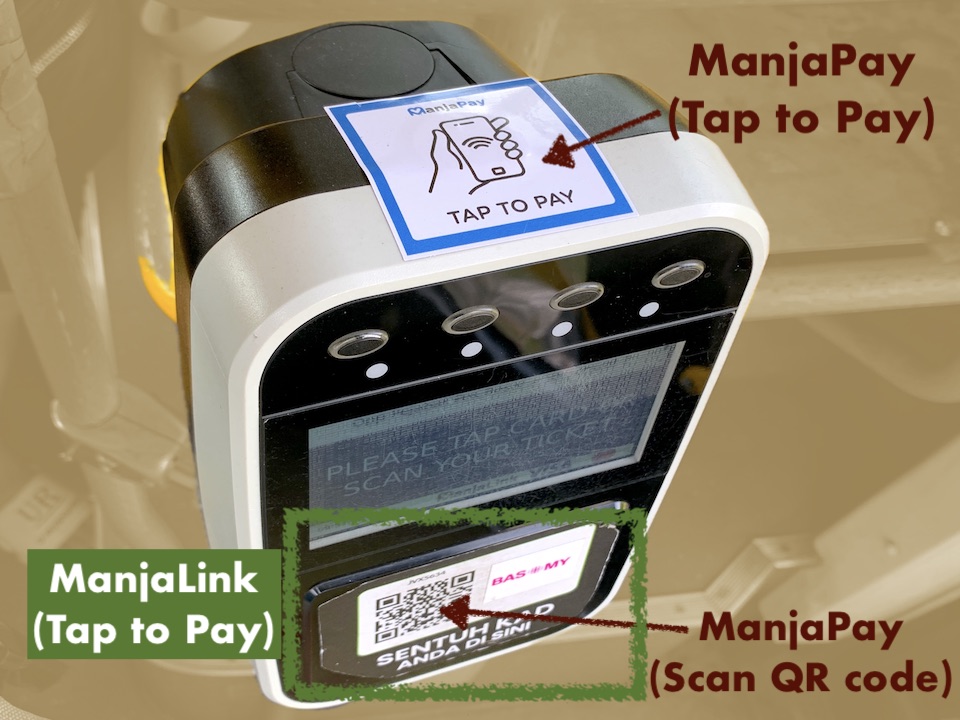
Instead of tapping a card on the fare reader when boarding / alighting from a bus, ManjaPay works by bringing the NFC-enabled mobile phone close to the top of the reader, or by scanning the QR code below the screen on the front of the reader.
More info: Manja website
3. Visa / Mastercard (Credit Card)
While both ManjaLink card and ManjaPay eWallet are more beneficial for frequent travellers, using credit cards may be easier for once-in-a-blue-moon or less-frequent travellers.
Since April 2025, payment of bus fares by Mastercard, and subsequently Visa, are accepted on selected BAS.MY services and Causeway Link cross-border services. On BAS.MY services, simply tap the physical credit card — or via Wallets, Apple Pay, Google Pay, etc, on NFC-enabled smartphones — on fare readers on boarding and alighting to pay. On cross-border services and Senai Airport Service AA1, tap on boarding only. Unlike ManjaLink and ManjaPay, there is no discounted fares for credit / debit cards.
However, credit cards suffer from poor exchange rates and can result in paying more for the bus fares — if used repeatedly and in the long run. For few journeys, the difference is not much and a very small price to pay for convenience.
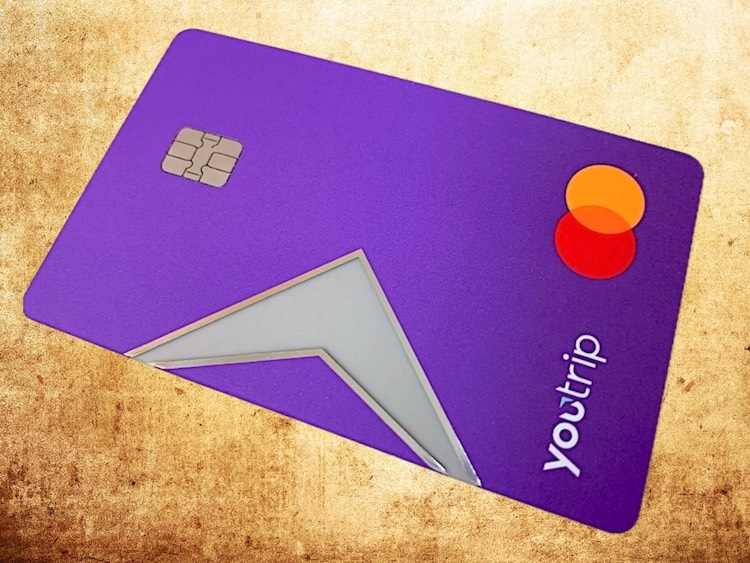
Alternatively, use Singapore-based YouTrip. Powered by Mastercard, the debit card is treated like a credit card except that it must be top-up with funds before use. YouTrip’s exchange rate is far better than any credit cards and money changers, and it can be used to pay the bus fares. It is cheaper than using cash.
Read: Singapore Tip: Use YouTrip Debit Card for Cashless Payments Overseas
Above are the 3 cashless payment methods for travellers using Causeway Link’s bus services to and around Johor Bahru — and also to Kulai, Pontian, Kota Tinggi and Senai International Airport. Your frequency of travel to Johor Bahru will determine the best cashless payment solution for you.
Get Around Johor Bahru:
More Payment Methods in Malaysia:





Leave a Reply